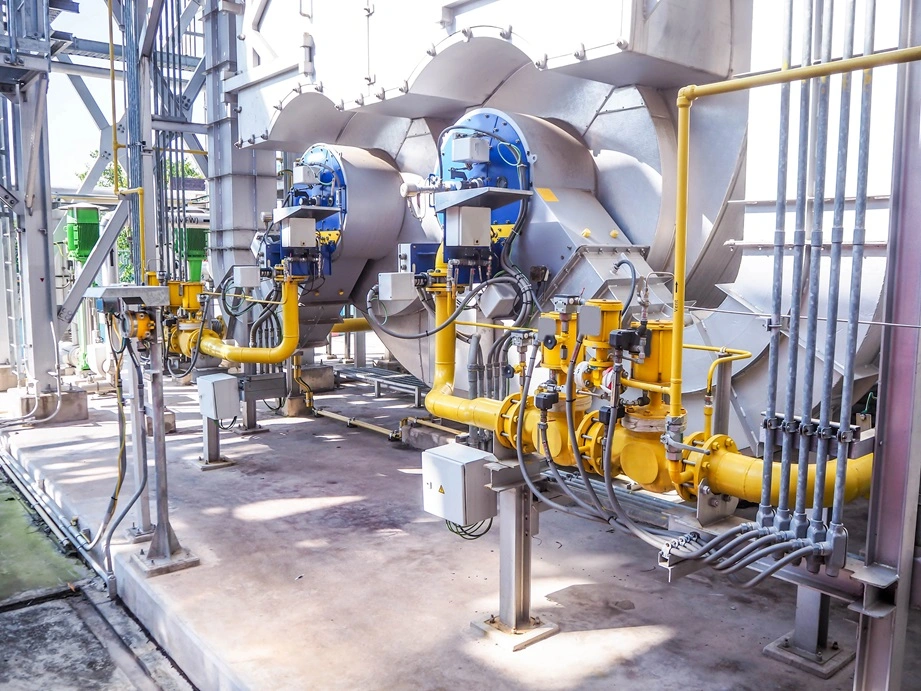
Condition Monitoring Without Stopping the Plant
Condition monitoring means tracking the condition of equipment in service so that maintenance is based on what the equipment is actually doing rather than on a fixed calendar. It lets faults be found early, repairs be planned into shutdowns, and unnecessary maintenance on healthy equipment be avoided.
Thermography is one of the most versatile condition monitoring techniques because almost every failure mode in process plant changes a temperature somewhere. Heat escaping through a failing refractory lining, a valve passing when it should be shut, a blocked line, or wet insulation all produce a surface temperature pattern that an infrared camera can see while the plant runs.
This article covers static and process equipment. For conveyors, motors, pumps and other rotating plant, see our article on thermographic surveys of conveyors and rotating plant.
Refractory Linings on Boilers, Furnaces and Kilns
Refractory linings protect the steel shell of boilers, furnaces, kilns, ducts and reactors from the heat inside. When a lining cracks, erodes or falls away, heat reaches the shell and the outside surface gets hotter in that area.
A thermographic survey of the shell maps those hot spots. Over successive surveys it shows whether a known hot area is growing, which helps decide whether a repair can wait for the next planned outage or needs attention sooner. A shell overheated for long enough can suffer damage of its own, so finding refractory failure early protects the pressure-containing or structural steel behind it.
The survey shows where heat is escaping. It does not show the condition of the lining directly, so findings are usually confirmed by internal inspection when the unit is next shut down. Our article on shutdown inspection planning covers how to plan that.
Insulation Breakdown and Corrosion Under Insulation
On hot pipework and vessels, damaged, missing or wet insulation lets heat escape, and the cladding over the affected area reads hotter than the surrounding run. On cold or refrigerated lines the pattern reverses, with damaged sections reading warmer than the rest.
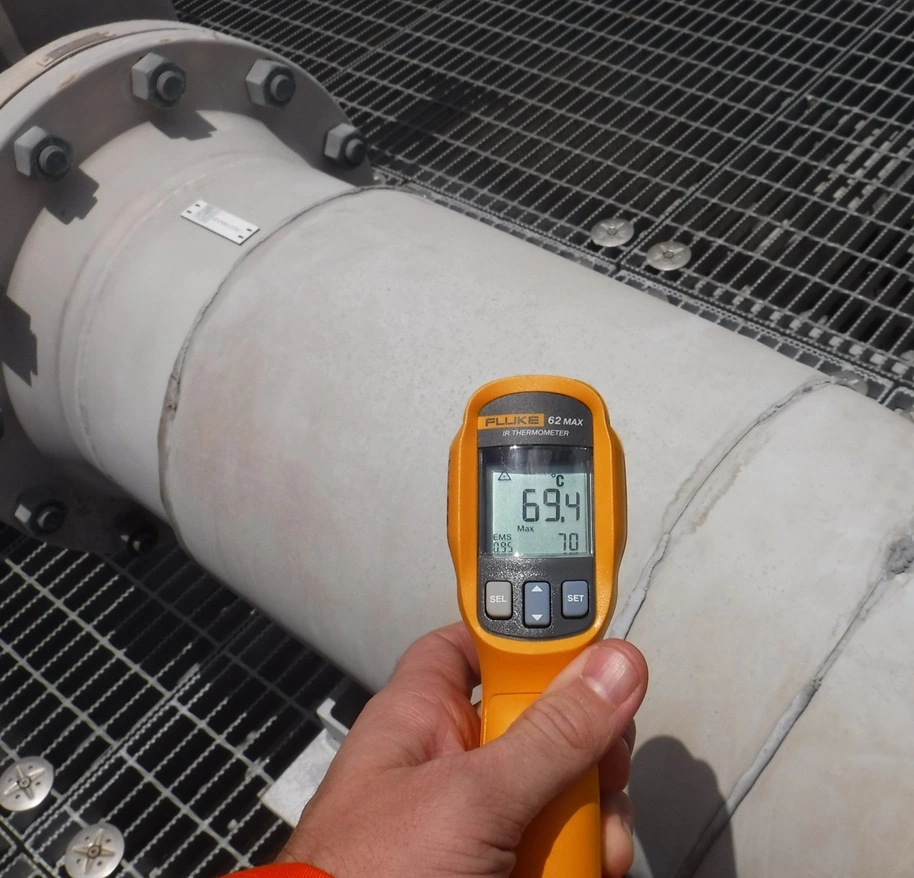
Wet insulation matters for two reasons. It wastes energy, and it creates the conditions for corrosion under insulation, one of the hardest forms of corrosion to find because it is hidden under the cladding. Thermography can help identify where insulation is likely wet and prioritise those areas for further inspection, such as removing insulation at selected points and carrying out ultrasonic thickness testing on the steel beneath.
Thermography does not see through insulation to the steel. It shows where the insulation is not doing its job, which is a strong indicator of where to look.
Valves, Steam Systems and Blockages
Passing valves. A valve that is meant to be shut but is letting product or steam through shows heat downstream of the seat when the line beyond it should be cold.
Steam traps and steam systems. Heat patterns either side of a trap indicate whether it is discharging as intended, and failed traps and damaged steam insulation show as heat loss.
Blockages and build-up. Scale, sediment or solidified product in a line or vessel changes how heat moves through the wall, so a blocked section can read hotter or cooler than the flowing line either side.
Tank and vessel levels. Liquid, sludge and vapour spaces in a tank or vessel hold heat differently, so the level often shows as a clear line on the outside of the shell. This is useful for confirming levels and finding sludge build-up without opening the vessel.
Where Thermography Fits Alongside Other NDT
Thermography is a screening and monitoring tool. It covers large areas quickly and shows where something is different, which makes it very efficient at deciding where to focus more detailed inspection.
It does not replace the examinations that other methods provide. It cannot measure wall thickness, find cracks in a weld, or confirm that a pressure vessel is fit for continued service. For pressure equipment, in-service inspection under AS 3788 remains the basis of compliance, and thermography findings feed into that programme rather than standing in for it. Our guide to pressure vessel compliance in NSW covers the obligations.
The most effective programmes use thermography to direct other methods: ultrasonic thickness testing where heat loss suggests wet insulation, internal inspection where a shell hot spot suggests refractory failure, and visual inspection to confirm what the camera has flagged.
Interpreting heat on insulated and refractory-lined equipment needs particular care with emissivity and surface conditions. Our article on thermography standards and emissivity covers the standards and the physics.
Process Plant in the Hunter
The Hunter's industrial base includes coal-fired power generation at stations such as Bayswater and Eraring, the Tomago aluminium smelter, the chemical and processing plants of the Kooragang Island industrial precinct, and manufacturing and engineering works across Newcastle and the valley. Boilers, furnaces, refractory-lined equipment, insulated pipework, steam systems and storage tanks are common across plant of these kinds.
For plant owners in the region, thermography is often most valuable in the months before a planned outage. A survey then shows where refractory, insulation and valves need attention, so that work can be scoped, materials ordered and the outage planned around real findings rather than assumptions.
APEC Inspection is based in Newcastle and provides thermography services as part of a wider NDT offering that includes ultrasonic testing, visual inspection and coating inspection. We are accredited by NATA to ISO/IEC 17025:2017, and our non-destructive testing is carried out by technicians certified to ISO 9712 through AINDT. See our page on NDT across the Hunter Valley, or request a quote with the equipment you want monitored and any outage dates you are planning around.