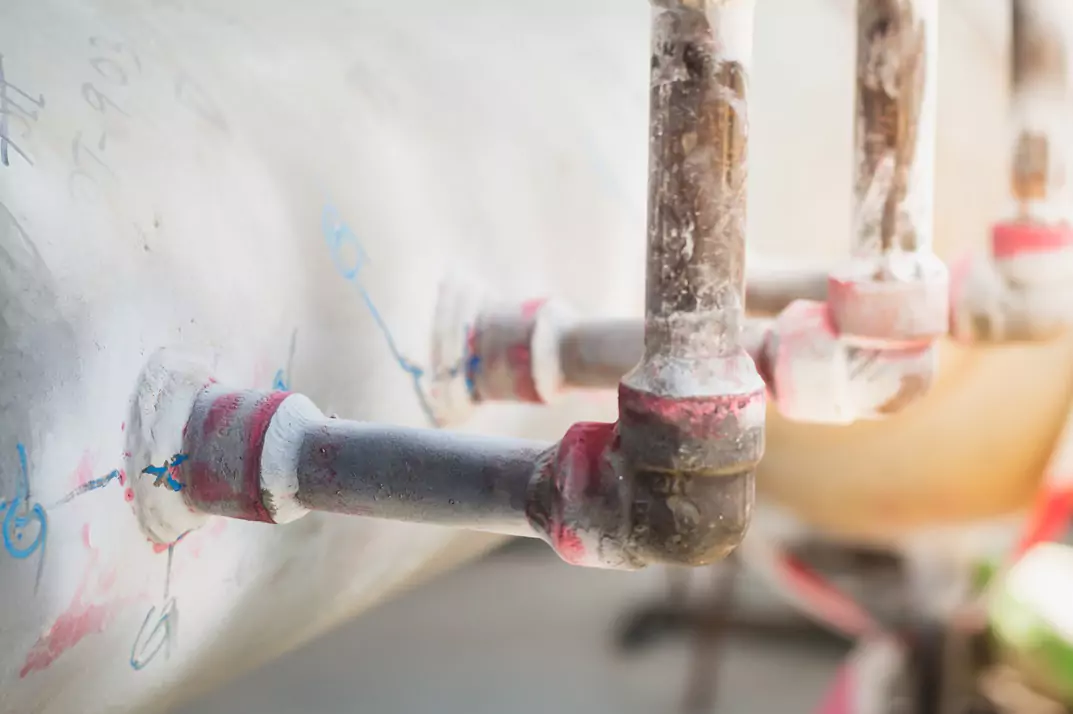
DYE & LIQUID PENETRANT INSPECTION (DPI)
Inspection method to check surface-breaking defects
About Contact UsDye & Liquid Penetrant Inspection (DPI)
APEC Inspection - Australia's Experts in Dye & Liquid Penetrant Inspection (DPI)
Dye Penetrant inspection (DPI), also called liquid penetrate inspection (LPI) or penetrant testing (PT), was one of the first techniques used to inspect for defects in materials. It is still widely used as a low-cost inspection method to check surface-breaking defects in all non-porous materials (metals, plastics, or ceramics). The penetrant may be applied to all non-ferrous materials and ferrous materials, although for ferrous components magnetic-particle inspection is often used instead for its subsurface detection capability.
APEC Inspections can provide you with the following Dye/Liquid Penetrant Inspection applications:
What Is Dye Penetrant Inspection?
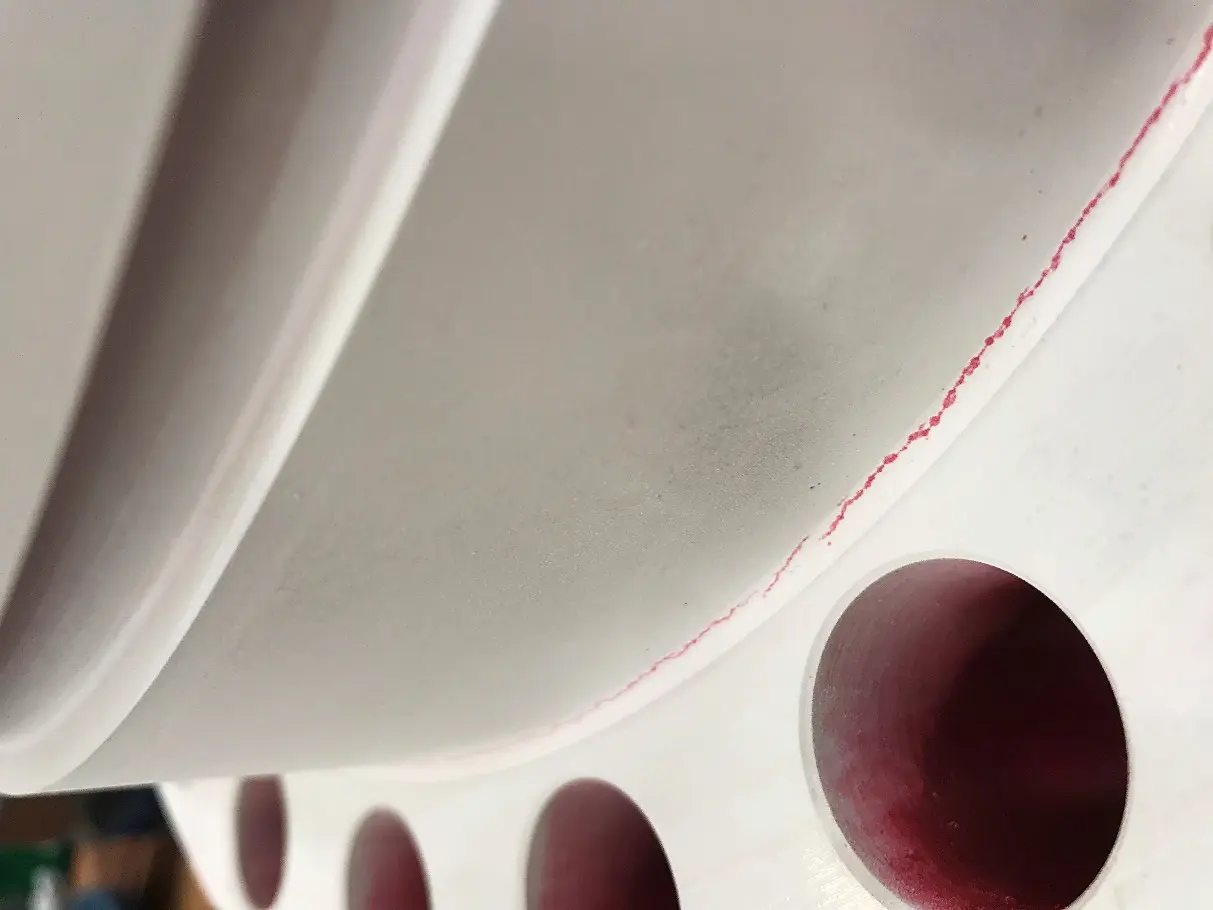
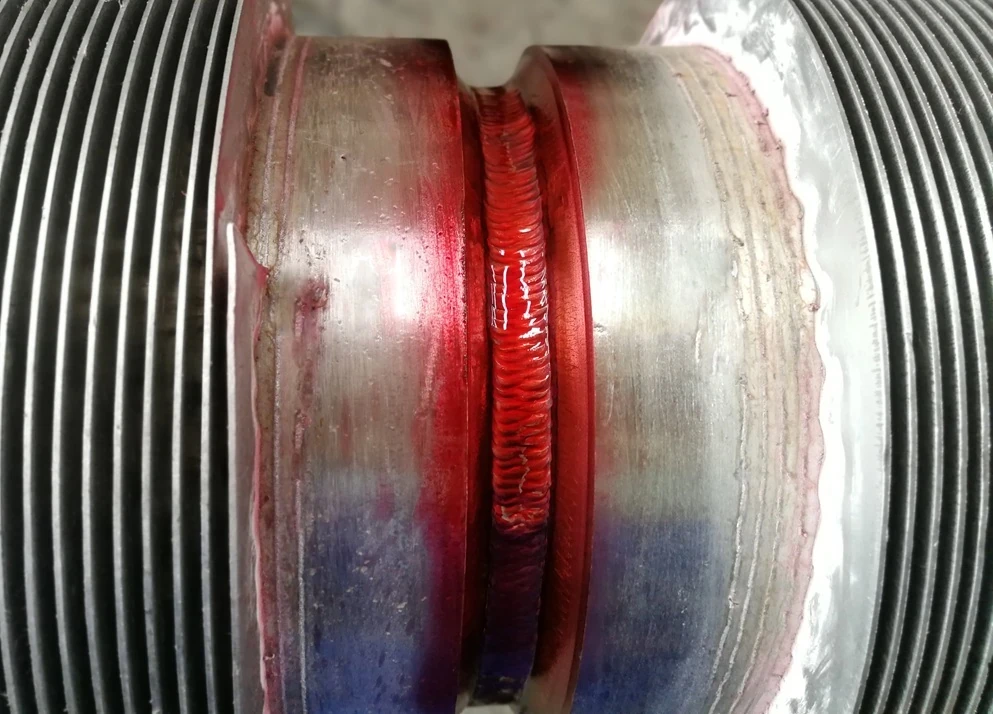
Dye penetrant inspection (PT), also called liquid penetrant inspection or DPI/LPI, finds flaws that break the surface of a part. A coloured or fluorescent liquid is applied to a clean surface and given time to soak in. Capillary action pulls the liquid into any crack, pore or lap fine enough to hold it. The excess is wiped away and a developer is applied, which draws the trapped penetrant back out and spreads it so the indication is wide enough to see. The result is a clear mark sitting directly over the flaw. It is a low-cost method that needs no electricity at the part, which makes it a practical choice for fieldwork.
How Penetrant Testing Works, Step by Step
The sequence is the same on every job. First the surface is pre-cleaned so paint, scale, oil and loose debris cannot block the openings or hold false penetrant. Penetrant is then applied and left for a set dwell time, often five to thirty minutes depending on the material and the size of defect being sought. Excess penetrant is removed, developer goes on, and after a short development period the inspector reads the indications. The part is post-cleaned at the end. Penetrants come in two visibility grades, visible colour-contrast read under white light and fluorescent read under UV-A in a darkened area, and in three removal types: water-washable, solvent-removable and post-emulsifiable. The combination chosen depends on the sensitivity needed and the conditions on site.
Penetrant Testing Applications
Penetrant testing picks up surface-breaking cracks, porosity and laps on welds, castings and forgings. Its real strength is materials. It works on virtually any non-porous material, so it covers the non-magnetic metals where magnetic particle inspection simply cannot be used. Austenitic stainless steel and aluminium are the common cases, and PT is also used on titanium, copper alloys, ceramics and many plastics. APEC uses it for weld inspection, casting and forging acceptance, leak paths on tanks and piping, and in-service crack detection on plant and equipment across mining, oil and gas and heavy industry.
Penetrant vs Magnetic Particle Inspection
These are the two main surface methods and they suit different jobs. Magnetic particle inspection is faster, tolerates a little surface contamination and can reveal flaws slightly below the surface, but it only works on ferromagnetic materials such as carbon and low-alloy steel. Penetrant testing reaches only flaws that break the surface, yet it works on metals that cannot be magnetised, which is exactly why it is the default for stainless steel and aluminium. On a mixed-material job the two are often run together. A first-pass visual inspection usually sets the scope before either method is applied.
Australian Standards & Compliance
APEC performs penetrant testing to the relevant Australian and international standards, including AS 2062 for the penetrant testing of products and components and the multi-part ISO 3452 for general principles and materials. Where a client or construction code calls for them, we also work to ASTM E165 for general industry and to ASME Section V, Article 6 for liquid penetrant examination, with acceptance to the relevant construction code. All testing is carried out by technicians certified to AS 3998 / ISO 9712, so the report holds up to client, regulator and insurer scrutiny.
Why Choose APEC Inspection for Penetrant Testing
APEC Inspection is a NATA-accredited inspection body and our penetrant testing is carried out by AINDT-certified technicians who give you clear, defensible reporting. We mobilise across Newcastle, the Hunter and nationally, and we fit PT into the wider NDT program your assets need rather than treating it in isolation. To talk through a job or request a quote, call the team directly.
Frequently Asked Questions
- What is dye penetrant inspection (DPI) and how does it work? +
- DPI applies a visible or fluorescent dye to the surface. The dye seeps into cracks or voids and is made visible using a developer, revealing surface-breaking defects.
- What materials can be inspected with dye penetrant testing? +
- DPI works on all non-porous materials including metals, plastics, and ceramics, making it one of the most versatile surface inspection methods.
- When should I use DPI instead of magnetic particle inspection? +
- Use DPI for non-ferromagnetic materials such as stainless steel, aluminium, and ceramics where MPI cannot be applied.
- Can dye penetrant inspection detect leaks in tanks and piping? +
- Yes, DPI is effective for leak detection. Penetrant applied to one side of a joint reveals through-wall defects by appearing on the opposite side.
- What is the difference between visible and fluorescent penetrant testing? +
- Visible penetrant uses a red dye read under normal white light against a white developer, which suits site work. Fluorescent penetrant glows under UV-A light in a darkened area and gives higher sensitivity for fine cracks.
- What standards cover dye penetrant testing in Australia? +
- Penetrant testing is commonly carried out to AS 2062 and ISO 3452, with ASTM E165 or ASME Section V Article 6 applied where a client or construction code calls for them. Technicians are certified to AS 3998 / ISO 9712.
- Does dye penetrant inspection damage the component being tested? +
- No. Penetrant testing is non-destructive. The part is cleaned before testing and the penetrant and developer are removed afterwards, leaving the component fit for continued service.
If You Have Any Query, Feel Free To Contact Us
Whether you'd like a fast quote, have a technical question, or want to schedule dye penetrant inspection, the APEC team is ready to help.







Blog Category: Liquid Penetrant Testing
Liquid Penetrant Testing PT vs MPI in Australia
Discover how liquid penetrant testing works, when it outperforms magnetic particle…
READ MORE →© apecinspect.com.au. All Rights Reserved. Designed by Peritus Digital. Powered by LYFE AI