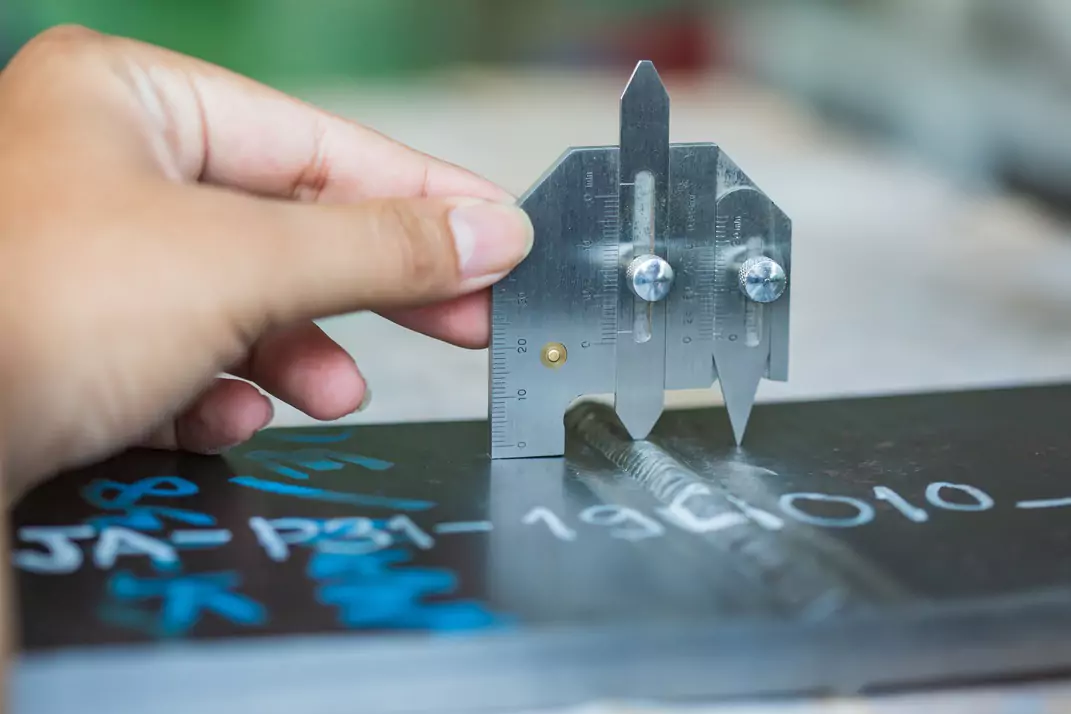
Welding Procedure Specification & Qualification
APEC Inspection - Australia's Experts in Welding Procedure Specification and Qualification
Welder certification, also known as welder qualification, is a process which examines and documents a welder's capability to create welds of acceptable quality following a well defined welding procedure. The welds are spot tested using non-destructive methods to verify their quality. A Welding Procedure Specification (WPS) is the formal written document describing welding procedures, which provides direction to the welder or welding operators for making sound and quality production welds as per the code requirements.
Qualification welds are typically examined using ultrasonic inspection to detect internal flaws, while hardness testing is performed to verify that weld and heat-affected zone properties meet the required specifications.
APEC Inspection Pty Ltd are Newcastle-based experts in all forms of testing, inspection and verification. Get in touch to see how we can help.
What Is a Welding Procedure Specification (WPS) and PQR?
A Welding Procedure Specification (WPS) is the master recipe for a weld. It sets out every essential variable a welder or welding operator must follow — the welding process, parent and filler materials, joint design, position, preheat and interpass temperature, welding current and voltage, travel speed, shielding gas and any post-weld heat treatment. Following an approved WPS is what gives a fabricator confidence that a production weld will meet the requirements of the applicable construction code.
A WPS on its own is only a proposal until it has been proven. That proof is the Procedure Qualification Record (PQR). To qualify a procedure, a test weld is produced strictly to the draft WPS, then subjected to non-destructive and mechanical testing. When the results satisfy the code's acceptance criteria, the PQR documents the actual values used and the test outcomes, demonstrating that the procedure produces sound, defect-free welds with the required mechanical properties. In short, the WPS tells the welder what to do, and the PQR is the recorded evidence that doing it produces an acceptable weld.
Welder Qualification vs Procedure Qualification
These two terms are often confused, but they answer different questions. Procedure qualification tests the procedure — it proves that a given combination of process, materials and parameters will produce a weld that meets the code. Welder (or welding operator) qualification tests the person — it proves that an individual has the skill to follow a qualified procedure and consistently deposit sound welds within the range of positions and thicknesses they are certified for.
Both are required for compliant fabrication. A qualified procedure operated by an unqualified welder, or a skilled welder working to an unproven procedure, leaves a gap in the chain of evidence. APEC's role in both cases is the same — to independently witness the test welds and carry out the inspection and non-destructive testing that confirms the qualification is valid, then document the result.
Australian Standards We Work To
The correct qualification standard depends on what is being fabricated. APEC witnesses and verifies qualification testing to the standards our clients build to, including:
- AS/NZS 3992 — Pressure equipment: Welding and brazing qualification. This is the primary Australian standard for welding procedure and welder qualification on pressure equipment. Its 2020 revision was harmonised with ISO 15614-1 and ASME IX, making cross-recognition of qualifications more straightforward.
- AS/NZS 1554 (all parts) — Structural steel welding, covering general fabrication (1554.1) through to structures subject to fatigue loading (1554.5).
- ISO 15614-1 — the international specification for the qualification of welding procedures (WPS/PQR) for arc and gas welding of steels and nickel alloys.
- AS/NZS ISO 9606-1 — qualification testing of welders for the fusion welding of steels.
- ASME BPVC Section IX — a widely accepted alternative for procedure and welder qualification, often specified on projects with US-based codes.
- AS/NZS 1200 — the pressure equipment standard that references welding qualification requirements.
APEC holds ISO 9712 / AINDT certified personnel and works under our ISO/IEC 17025 NATA accreditation, so the inspection and test results supporting your qualification records are independent and defensible.
How APEC Verifies Qualification Welds
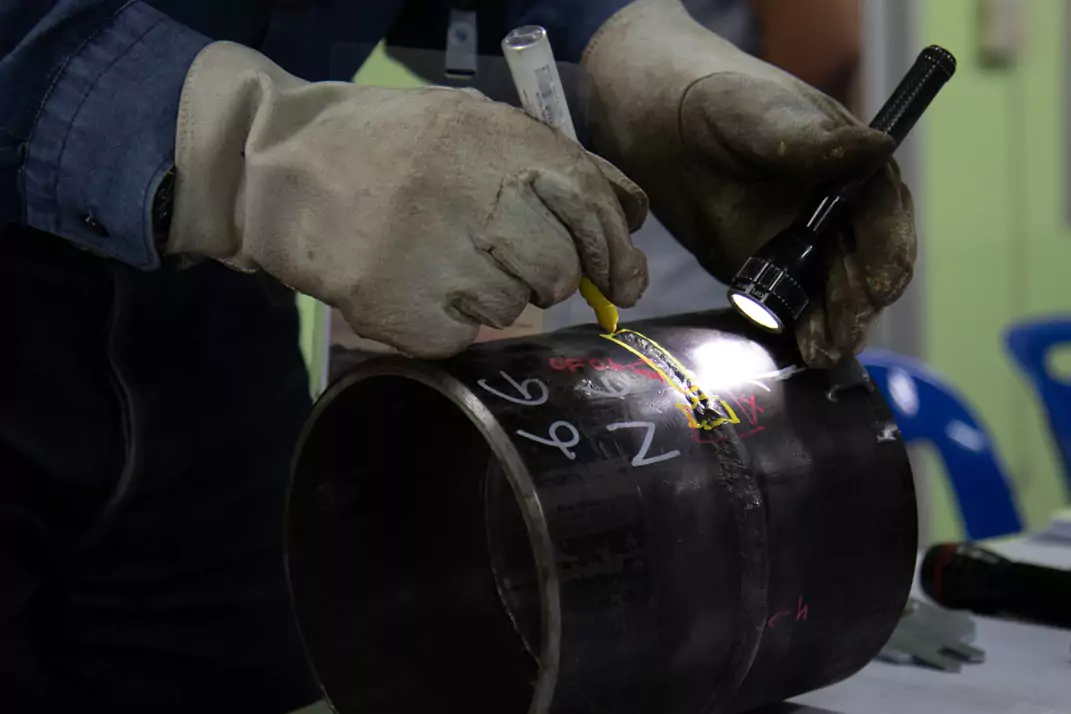
Qualification test welds are examined with the same rigour as any code weld. APEC applies the appropriate combination of non-destructive testing methods to each test piece, and witnesses the mechanical or destructive testing that the standard calls for. Our typical scope includes:
- Visual inspection — the first and mandatory check for profile, undercut, surface porosity and reinforcement.
- Radiographic testing (RT) — to reveal internal flaws such as lack of fusion, porosity and slag inclusions.
- Ultrasonic testing (UT) and phased array ultrasonic testing (PAUT) — for volumetric examination of the weld body and heat-affected zone.
- Magnetic particle testing (MT) and dye penetrant testing (PT) — for surface and near-surface discontinuities.
- Mechanical and destructive checks — where the qualification standard requires them, we witness and document hardness testing, macro examination, and bend and tensile testing to confirm the weld and heat-affected zone properties meet specification.
The results are compiled into clear documentation that supports the PQR and welder qualification records, giving fabricators, principals and regulators the evidence they need.
Why It Matters
Welding is a special process — its quality cannot be fully confirmed by inspecting the finished product alone, which is exactly why procedure and welder qualification exist. Properly qualified procedures and welders reduce the risk of weld failures that can cause pressure equipment ruptures, structural collapse and serious harm. Verified qualification is also a compliance requirement: Australian construction codes and Work Health and Safety obligations expect fabricators to demonstrate that their welds were made by qualified people to proven procedures. Independent inspection and NDT of qualification welds closes the loop, providing objective, documented proof that the work meets the standard before it goes into service.
Request A QuoteFrequently Asked Questions
- What is a Welding Procedure Specification (WPS)? +
- A WPS is a formal document describing welding parameters including process, materials, joint design, preheat, and post-weld heat treatment to produce quality welds meeting code requirements.
- What is the difference between welder qualification and procedure qualification? +
- Procedure qualification tests that a welding procedure produces acceptable welds. Welder qualification tests that an individual can follow that procedure to produce quality welds.
- Why is welder certification important in Australia? +
- It ensures welders produce acceptable quality welds meeting Australian Standards such as AS/NZS 1554, essential for structural safety.
- What NDT methods verify welder qualification test welds? +
- Test welds are verified using radiographic testing, ultrasonic testing, magnetic particle inspection, and dye penetrant inspection.
- Which Australian standard covers welding qualification for pressure equipment? +
- AS/NZS 3992 is the primary Australian standard for welding and brazing procedure and welder qualification on pressure equipment, and its 2020 revision is harmonised with ISO 15614-1 and ASME IX.
- Does APEC do the welding, or the inspection? +
- APEC is an independent inspection and NDT provider. We witness, test and verify welding procedure and welder qualification through non-destructive testing and documentation; we do not carry out the production welding itself.
- How do I arrange welding qualification inspection? +
- Call APEC Inspection on (02) 4062 0305 or send an enquiry through our contact page, and our team will discuss your project, applicable standards and qualification requirements.





Blog Category: Welding Procedure Specification
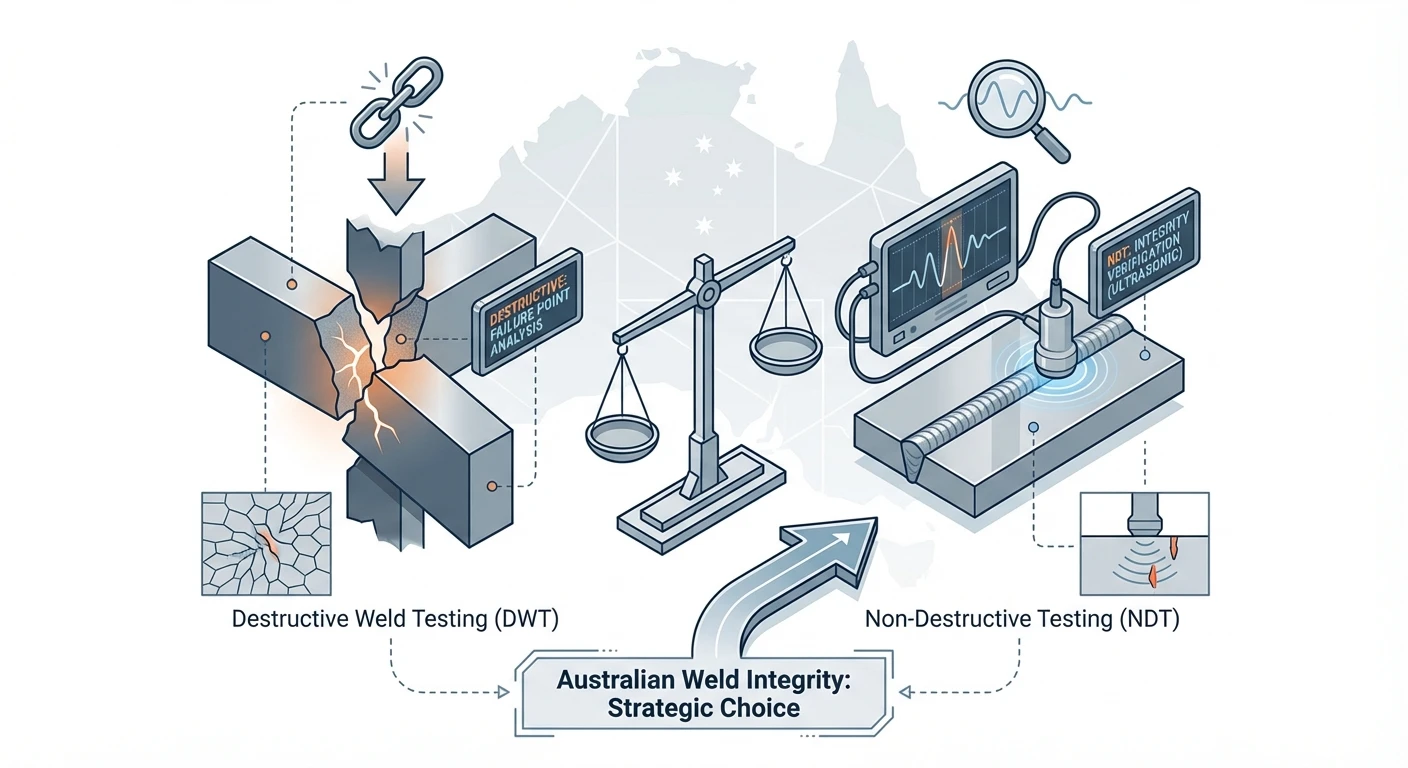
Destructive Weld Testing vs NDT in Australia
Understand destructive weld testing vs NDT in Australia, when you really need…
READ MORE →© apecinspect.com.au. All Rights Reserved. Designed by Peritus Digital. Powered by LYFE AI