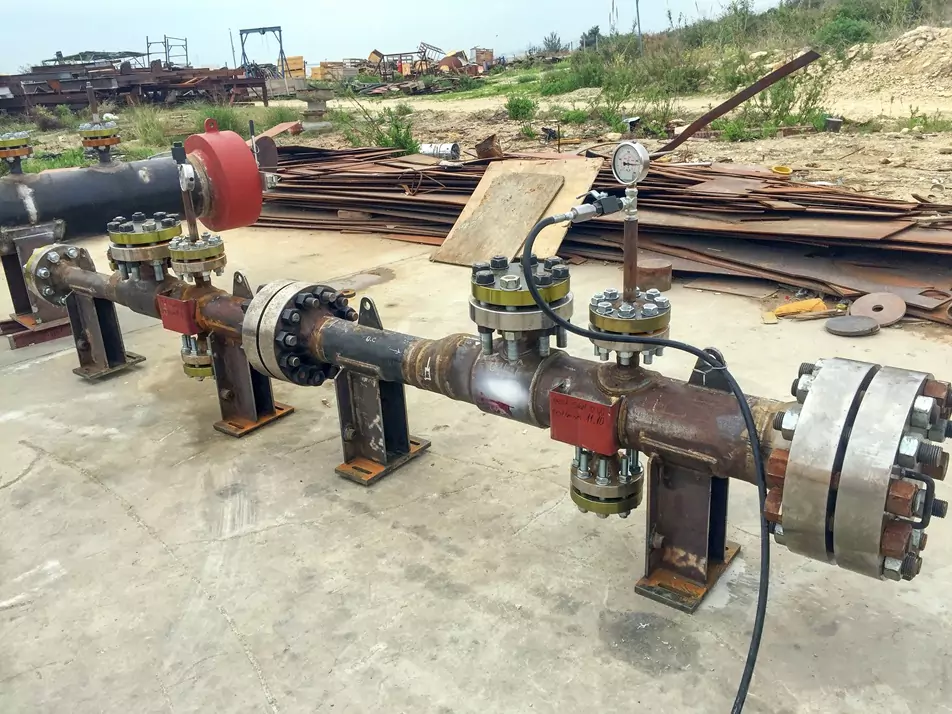
HYDROSTATIC TESTING
Identify potential issues early in the process with APEC Inspections Hydrostatic Testing Services. Reduce the risk of failures.
About Contact UsHYDROSTATIC TESTING
APEC Inspection - Australia's Experts in Hydrostatic Testing
Hydrostatic testing is a widely recognised and reliable method for assessing the integrity and soundness of pressure vessels, piping joints, and related equipment. This test involves filling the system with liquid, typically water, and applying pressure that exceeds normal operating conditions to simulate stress scenarios.
Apec Inspection Services conducts these tests to identify potential issues such as leaks, plastic deformation, distortion, or bulging, which may indicate inadequate product quality. As a safer alternative to pneumatic testing and sometimes a substitute for more expensive non-destructive testing methods, hydrostatic testing is crucial for newly manufactured pressure equipment, after alterations or repairs, and before recommissioning.
The importance of hydrostatic testing extends across multiple industries, including oil and gas, chemical processing, hydrogen plants and power generation. Apec Inspection Services performs these tests at various stages of a system's lifecycle, including post-installation, after modifications, and periodically during operation.
By applying pressure that exceeds design specifications, Apec Inspection provides a safety margin that demonstrates the mechanical integrity of the vessel or piping system under controlled conditions. Hydrostatic testing is a key component of our pressure vessel inspection program and is also applied to storage tanks to confirm structural soundness. Apec adheres to rigorous standards and procedures, performing comprehensive dimensional checks to ensure compliance with construction drawings and manufacturing tolerances before initiating the hydrostatic test. This meticulous approach helps identify potential issues early in the process, reducing the risk of failures during testing or operation, and ultimately helping clients avoid costly downtime, ensure regulatory compliance, and protect both assets and personnel. To learn more, explore our hydrostatic testing blog, including our guide to vac truck hydrostatic testing in Australia.
Request A Quote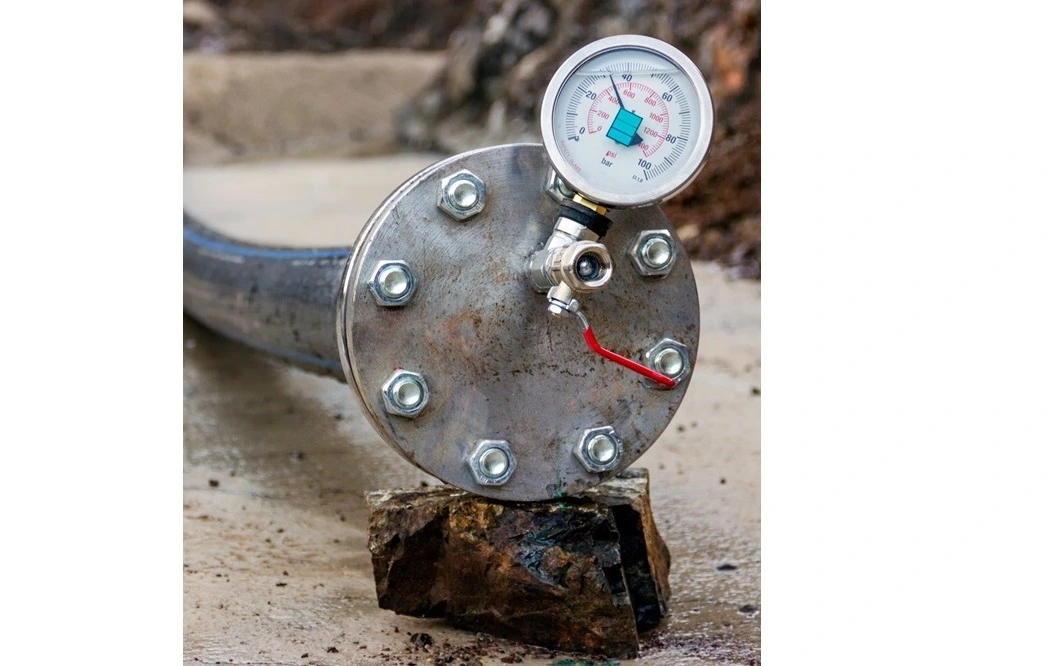
What Is Hydrostatic Testing?
Hydrostatic testing is a way of proving a pressurised item by filling a vessel or pipe system with water and pressurising it above its design pressure, then holding that pressure while watching for leaks, distortion or a drop on the gauge. The principle is simple. If the equipment can hold a pressure well beyond what it will see in service, and show no leak, no permanent deformation and no loss of pressure over the hold period, you have solid evidence the item is sound. It is a proof test rather than a flaw-finding method, which is why it sits alongside the other checks rather than replacing them.
Why Water and Not Air
Water is used as the test medium because it is nearly incompressible. Push the pressure up in a water-filled vessel and very little energy is stored in the fluid itself. Do the same with air or gas and the system becomes a large store of energy that wants to release the moment something gives way. That difference matters. A hydrostatic test that ends in a failure tends to weep or split and lose pressure quietly, whereas a pneumatic test failure can be violent. Filling with water is the far safer way to prove a pressurised item, and it is the default for vessels and piping unless there is a specific reason a wet test cannot be done.
How a Hydrostatic Test Is Run
The sequence is methodical. We fill the item with water and vent the trapped air, because any pocket of gas left inside reintroduces the stored-energy problem we are trying to avoid. Pressure is then raised in stages to the required test pressure, not in one jump, so the equipment is brought up under control and watched at each step. Once at the test pressure the item is held while the technician inspects joints, welds and fittings and keeps an eye on the gauge for any decay. After the hold it is depressurised and drained in a controlled way. Visual inspection and other NDT before the test confirm the item is fit to be pressurised at all, and a further look afterwards confirms nothing moved or cracked during the hold.
Where Hydrostatic Testing Is Used
Hydrostatic testing is applied to new vessels and piping before they enter service, to equipment that has been repaired or altered, and to in-service plant being re-validated on a periodic basis. APEC carries it out across oil and gas, chemical processing, hydrogen plants and power generation. On a pressure vessel it forms part of the wider pressure vessel inspection program, where the proof test backs up the dimensional checks and NDT already done on the item. The same approach extends to pipework and other pressure equipment wherever a documented proof of integrity is needed.
Test Pressures, Standards and Compliance
The test pressure is not arbitrary. Under AS 1210 for pressure vessels it is a defined multiple of the design pressure, commonly around 1.43 times design for a standard vessel, calculated from the design data for each item. Pressure piping is tested to AS 4041, and in-service inspection of pressure equipment is governed by AS/NZS 3788, with the examination and testing methods drawn from AS 4037. Working to these standards means the test pressure, the hold time and the acceptance criteria are all defined before a drop of water goes in, and the resulting report ties back to a recognised code.
Why Choose APEC Inspection for Hydrostatic Testing
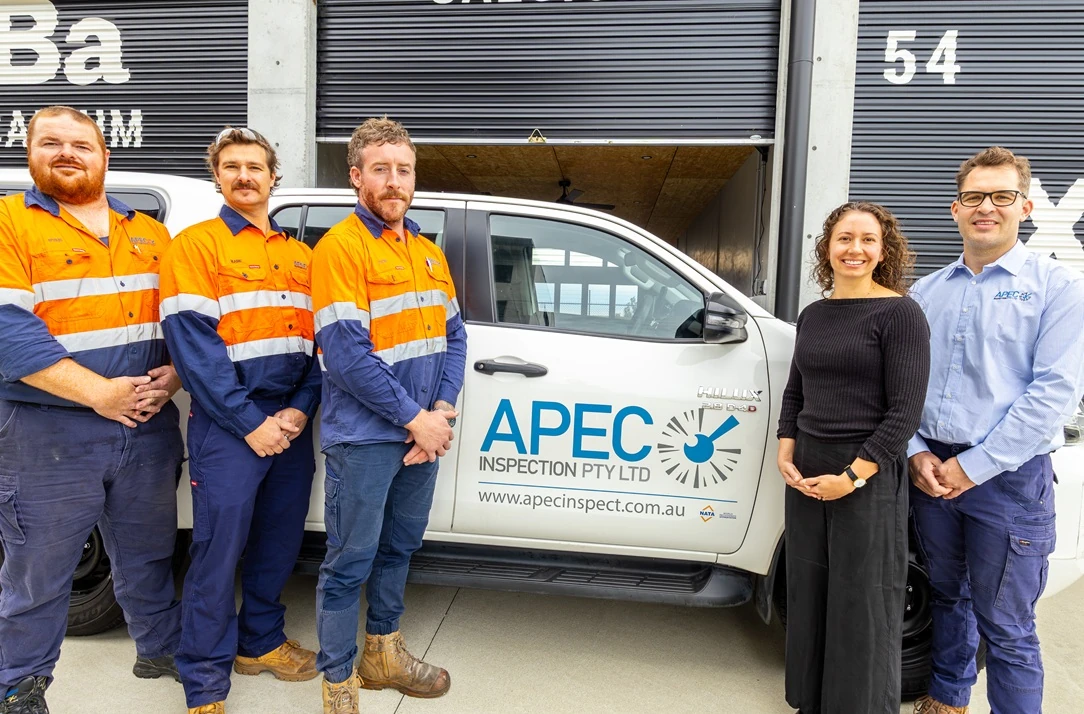
APEC Inspection is NATA-accredited and our testing is carried out by AINDT-certified technicians, so the report is one your clients, regulators and insurers will accept. We plan each test against the right standard, run it under control, and document what we find clearly. We mobilise across Newcastle, the Hunter and nationally, and fold hydrostatic testing into the broader NDT and pressure equipment work your assets need. To get started, request a quote or call the team directly.
Frequently Asked Questions
- What is hydrostatic testing and how does it work? +
- Hydrostatic testing fills a vessel or piping with liquid and applies pressure exceeding normal operations to identify leaks, deformation, or quality issues.
- When is hydrostatic testing required for pressure vessels in Australia? +
- It is required for new equipment, after alterations or repairs, before recommissioning, and periodically during operation under AS 3788.
- Is hydrostatic testing safer than pneumatic testing? +
- Yes, water is nearly incompressible so a failure releases far less stored energy than compressed gas, significantly reducing catastrophic failure risk.
- What industries require hydrostatic testing? +
- Oil and gas, chemical processing, hydrogen plants, power generation, and manufacturing across all lifecycle stages from installation to periodic testing.
- Why is water used instead of air for hydrostatic testing? +
- Water is nearly incompressible, so it stores very little energy under pressure. If the item being tested fails, a water-filled system releases that energy far more safely than compressed gas, which is why water is the standard test medium.
- What test pressure is used for an AS 1210 pressure vessel? +
- Under AS 1210, the hydrostatic test pressure is a defined multiple of the design pressure, commonly around 1.43 times design for a standard vessel. The exact figure depends on the design data, so it is calculated for each item before testing.
- Is APEC Inspection NATA-accredited for hydrostatic testing? +
- Yes. APEC Inspection is NATA-accredited and the work is carried out by AINDT-certified technicians. That means the test reports are accepted by clients, regulators and insurers.
If You Have Any Query, Feel Free To Contact Us
Whether you'd like a fast quote, have a technical question, or want to schedule a hydrostatic test, the APEC team is ready to help.







Blog Category: Hydrostatic Testing
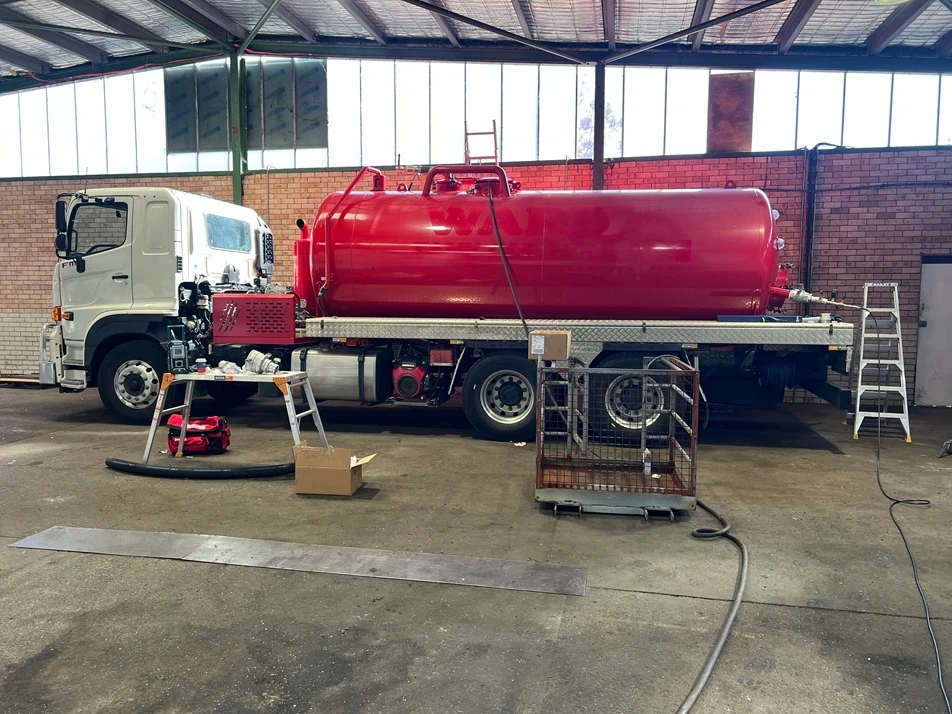
Vac Truck Hydrostatic Testing in Australia
Learn how vac truck hydrostatic testing checks vacuum truck tank integrity, meets…
READ MORE →© apecinspect.com.au. All Rights Reserved. Designed by Peritus Digital. Powered by LYFE AI