AS 1554, AS/NZS 1554 and AS/NZS 1554.1: Is It the Same Standard?
Mostly, yes. AS/NZS 1554 is the joint Australian and New Zealand standard series for structural steel welding. People write it as AS 1554, AS1554, AS/NZS 1554 or AS 1554.1, and in day-to-day use they nearly always mean AS/NZS 1554.1, Part 1 of the series, which covers the welding of steel structures. The current edition of Part 1 is AS/NZS 1554.1:2014, which has since been amended.
The difference matters when a drawing or specification calls up a specific part. AS/NZS 1554 is a family of seven parts, and a stainless steel handrail, a crane runway beam and a reinforcing bar splice are each welded under different ones. The older “AS 1554” form survives from editions published by Standards Australia alone, before the series became a joint standard. Standards are revised, and requirements change between editions. Always check which edition your contract, drawing or regulator cites before relying on any requirement.
This guide explains what each part covers, what the SP and GP weld categories mean, how procedures and welders are qualified, and how welds are inspected. It is written for fabricators, builders, asset owners and project engineers who need to understand the standard without reading it cover to cover.
The Seven Parts of AS/NZS 1554
Each part covers a different type of steel or welding situation. Using the wrong part means the wrong rules for procedures, consumables and inspection.
| Part | Covers |
|---|---|
| AS/NZS 1554.1 | Welding of steel structures: the general structural steel part, and the one most people mean |
| AS/NZS 1554.2 | Stud welding of steel studs to steel |
| AS/NZS 1554.3 | Welding of reinforcing steel |
| AS/NZS 1554.4 | Welding of high-strength quenched and tempered steels |
| AS/NZS 1554.5 | Welding of steel structures subject to high levels of fatigue loading |
| AS/NZS 1554.6 | Welding of stainless steels for structural purposes |
| AS/NZS 1554.7 | Welding of sheet steel structures |
Parts 4, 5 and 6 matter most on industrial sites. Quenched and tempered wear and structural plate, common in mining equipment, falls under Part 4. Conveyor structures, crane runways and vibrating equipment can fall under Part 5 where the designer has assessed the fatigue loading as high. Stainless steel platforms, tanks and supports fall under Part 6.
What AS/NZS 1554.1 Covers, and What It Doesn't
AS/NZS 1554.1 covers arc welding of steel structures built from plate, rolled sections, hollow sections and built-up members. Designers call it up through the steel structures design standard, AS 4100, and through the fabrication and erection standard, AS/NZS 5131. Builders, fabricators and inspectors then work to it.
It does not cover pressure equipment. Welding of pressure vessels, boilers and pressure piping is qualified to AS 3992 (formerly AS/NZS 3992) and manufactured to the pressure equipment standards. Our guide to Australian pressure equipment standards explains how those fit together. A fabricator who holds AS/NZS 1554 procedures cannot use them on a pressure vessel without qualifying to the pressure equipment rules.
It is also not the right part for high-fatigue structures, quenched and tempered steels, stainless steel or thin sheet. Those fall under the other parts in the table above.
SP vs GP: Weld Categories Explained
AS/NZS 1554.1 sorts welds into two categories, and the category decides the acceptance limits for weld imperfections.
GP (general purpose) welds are for structures and members where the weld is lightly stressed, or where a lower quality level is acceptable for the job.
SP (structural purpose) welds are for structural members where a higher quality level is needed. SP acceptance limits are tighter. Imperfections such as undercut, porosity, lack of fusion and incomplete penetration are allowed in smaller amounts, or not at all, than for GP. Cracks are not acceptable in either category.
The designer chooses the category and should show it on the drawings or in the specification. If a drawing does not state a category, don't assume one: ask the designer before welding starts, because the category also changes how the welds will be inspected and accepted. AS/NZS 1554.5 adds a further category, FP (fatigue purpose), for structures under high fatigue loading, where weld profile and surface condition matter even more.
On projects built to AS/NZS 5131, the construction category (CC1 to CC4) assigned to the structure also shapes the inspection and test plan. Category and inspection requirements should be settled together at the start, not argued about at handover.
Weld Procedures: Prequalified or Qualified by Testing
Every production weld should be made to a written welding procedure specification (WPS). AS/NZS 1554.1 allows two routes to an approved procedure.

Prequalified procedures use combinations of steel, consumables, joint preparation and welding process that the standard already accepts as sound. Within those limits, a fabricator can write and use a WPS without a test weld. Step outside them, for example with a different steel grade, joint preparation or process, and the procedure is no longer prequalified.
Procedures qualified by testing are proven by making a test weld to the draft WPS and then testing it. Testing typically combines visual examination and non-destructive testing of the test piece with destructive tests such as macro examination and mechanical tests. The results are recorded in a procedure qualification record (PQR). Our article on destructive weld testing vs NDT covers why both kinds of testing are used.
Some project specifications accept procedures qualified to other standards, such as ISO 15614-1 or ASME Section IX. Whether that is acceptable is set by the contract, not by the fabricator. Our welding procedure qualification page explains the WPS and PQR relationship and how qualification welds are independently verified.
Welders and Welding Supervision
A qualified procedure only produces sound welds in the hands of a qualified welder. AS/NZS 1554.1 requires welders to be qualified for the work they do. Qualification to AS/NZS ISO 9606.1 or AS/NZS 2980 is widely used for steel. A welder's qualification is tied to the process, position and type of joint tested, so it does not automatically cover every weld on a job.
The standard also expects welding to be carried out under a welding supervisor who is responsible for making sure procedures are followed, consumables are handled correctly and records are kept. For an asset owner or principal, the practical question is simple: can the fabricator produce, for every weld, the WPS used, the welder who made it and evidence that the welder was qualified? If not, the weld's compliance is hard to demonstrate later.
How Welds Are Inspected Under AS/NZS 1554.1
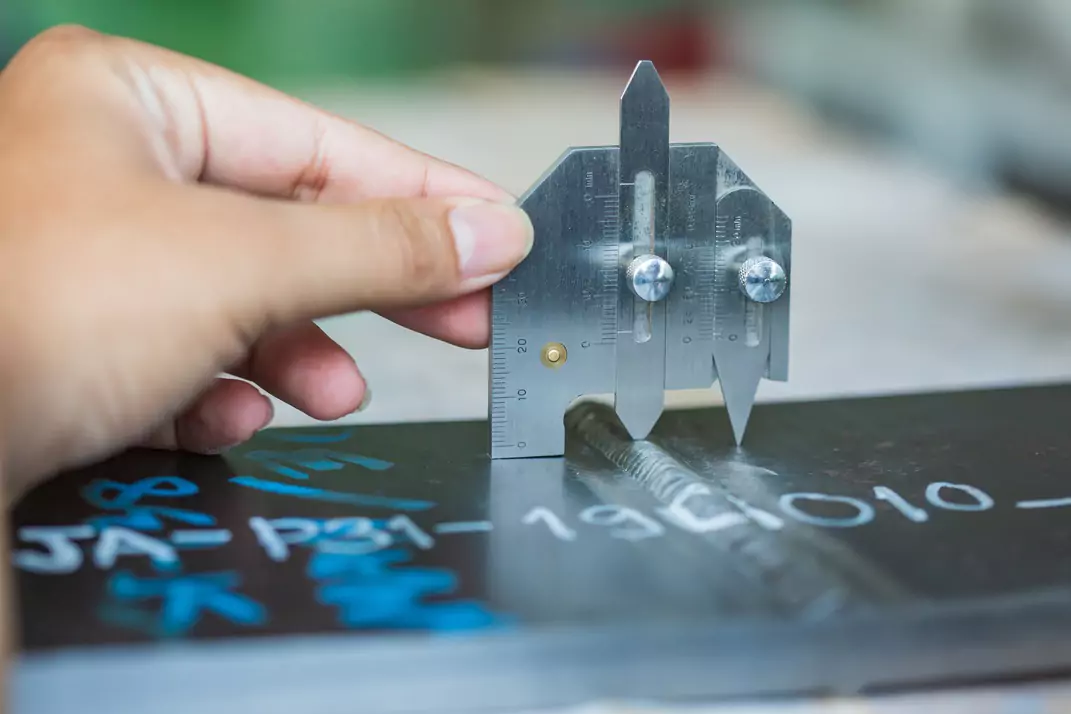
Visual examination comes first, on every weld. Most weld problems show up in profile, size, undercut, surface porosity, spatter and cracking, and visual inspection with gauges and good lighting finds them quickly and cheaply. Our visual inspection page covers what a structured visual examination involves.
Other methods are added as the job specifies. The type and extent of non-destructive examination beyond visual is normally set by the designer or project specification. It is commonly a stated proportion of welds by category, with full examination for critical joints. Each method has its own Australian technique standard:
| Method | Finds | Australian technique standard |
|---|---|---|
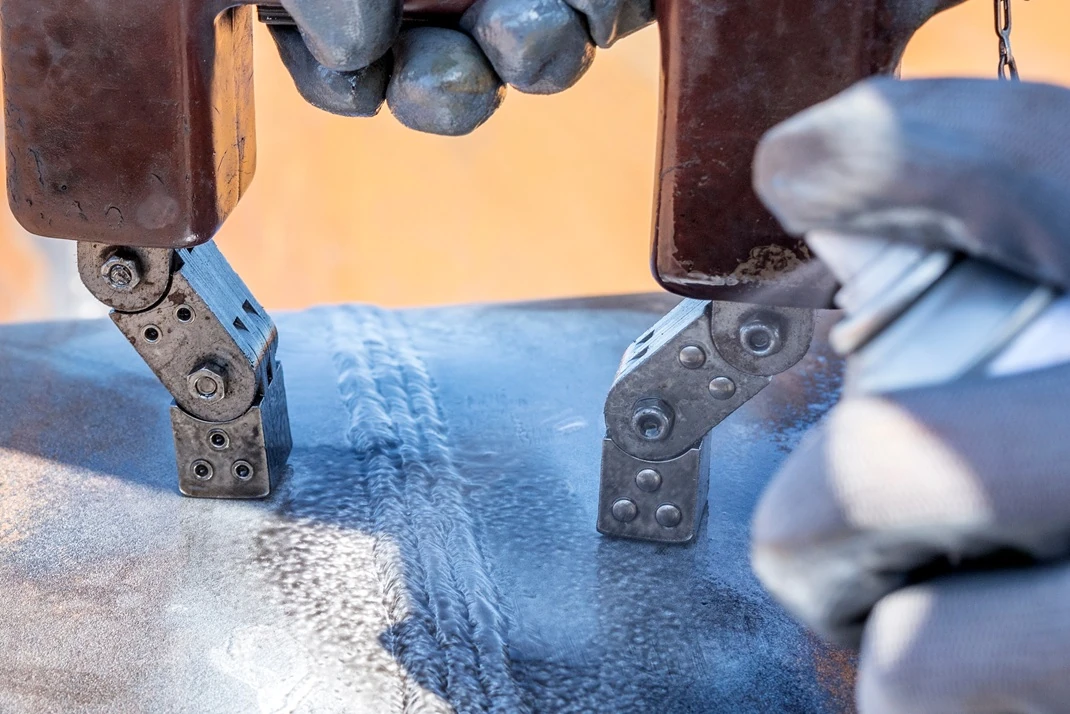
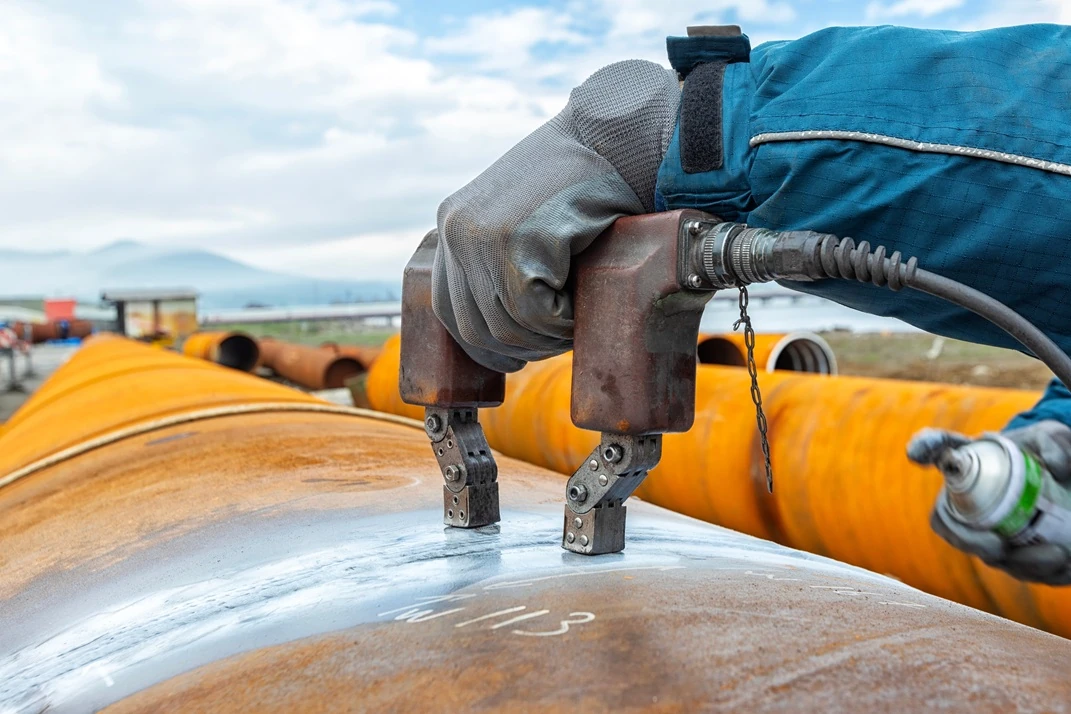
| Magnetic particle testing (MT) | Surface and near-surface cracks in ferritic steel, including fillet weld toes | AS 1171 |
| Penetrant testing (PT) | Surface-breaking defects, including on stainless steel and other non-magnetic metals | AS 2062 |
| Ultrasonic testing (UT) | Internal defects in butt and full-penetration welds: lack of fusion, slag, cracks | AS 2207 |
| Radiographic testing (RT) | Internal volumetric defects such as porosity and slag in butt welds | AS 2177 |
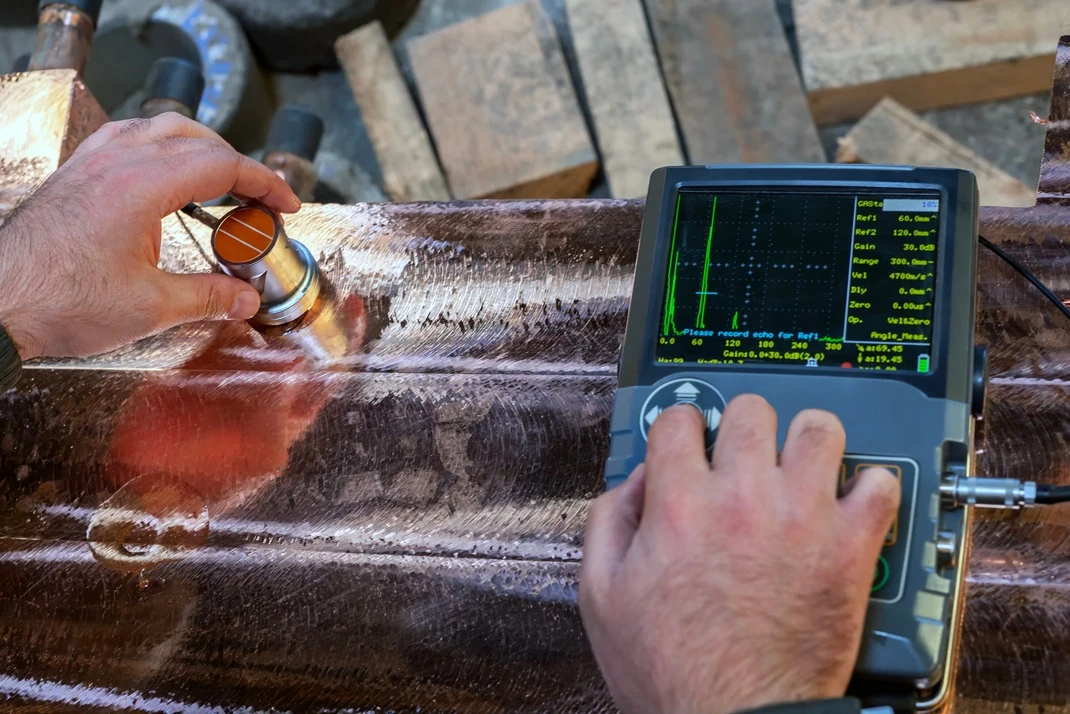
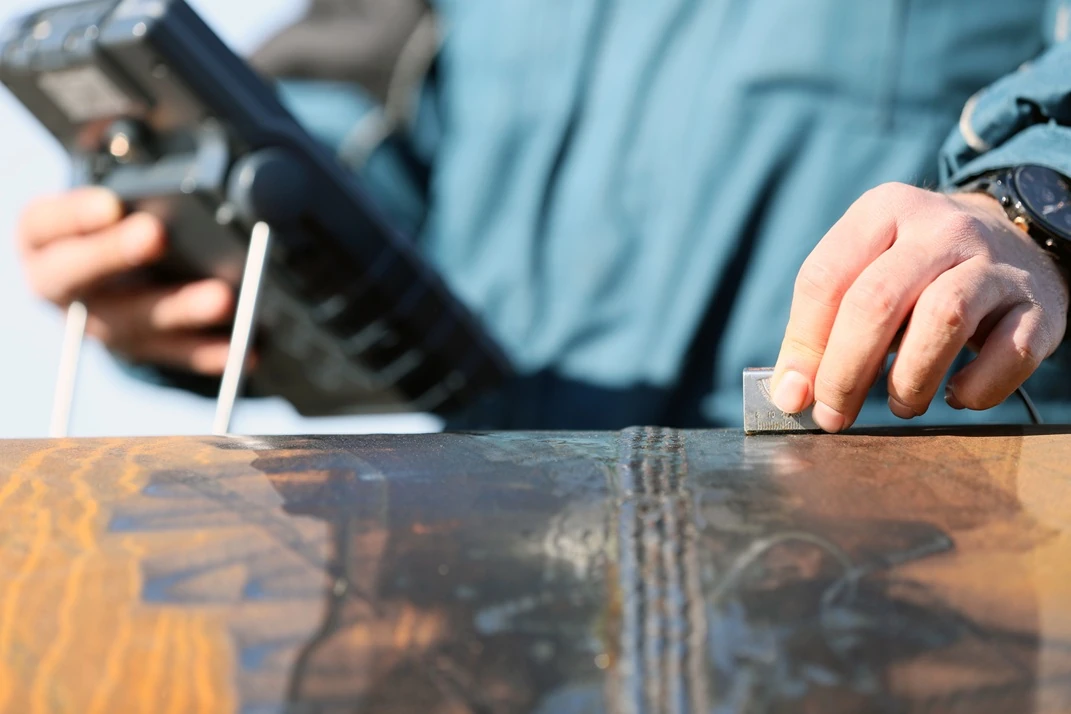
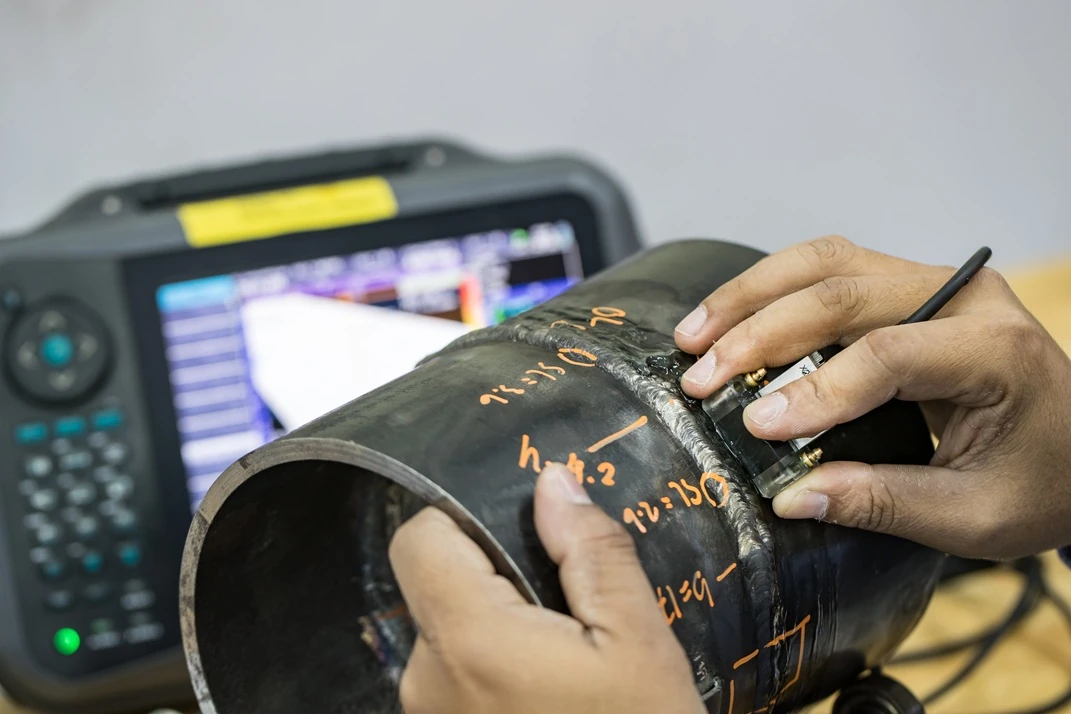
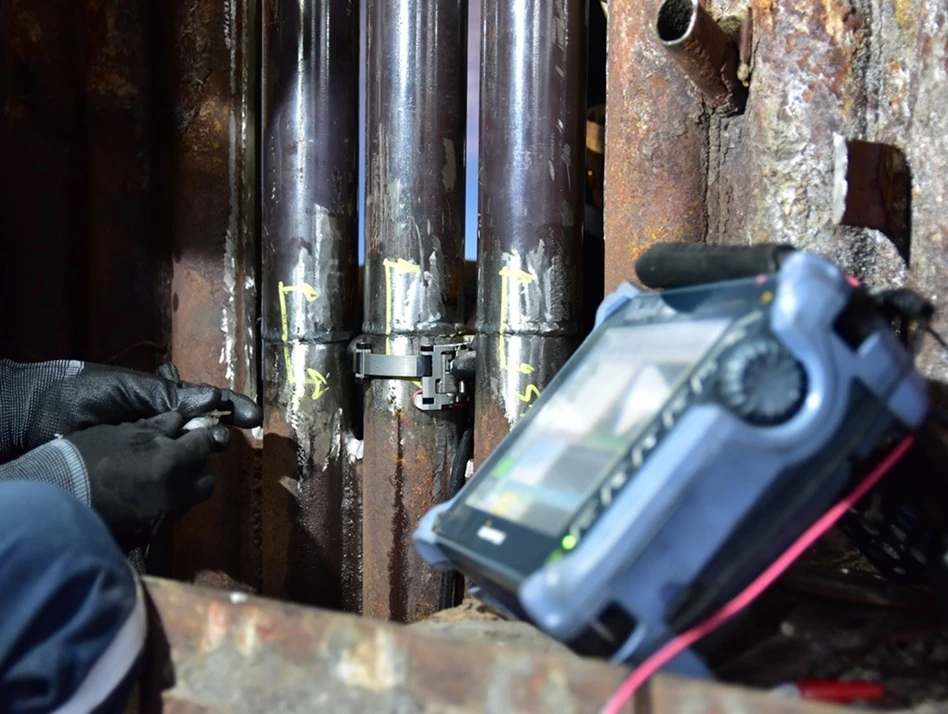
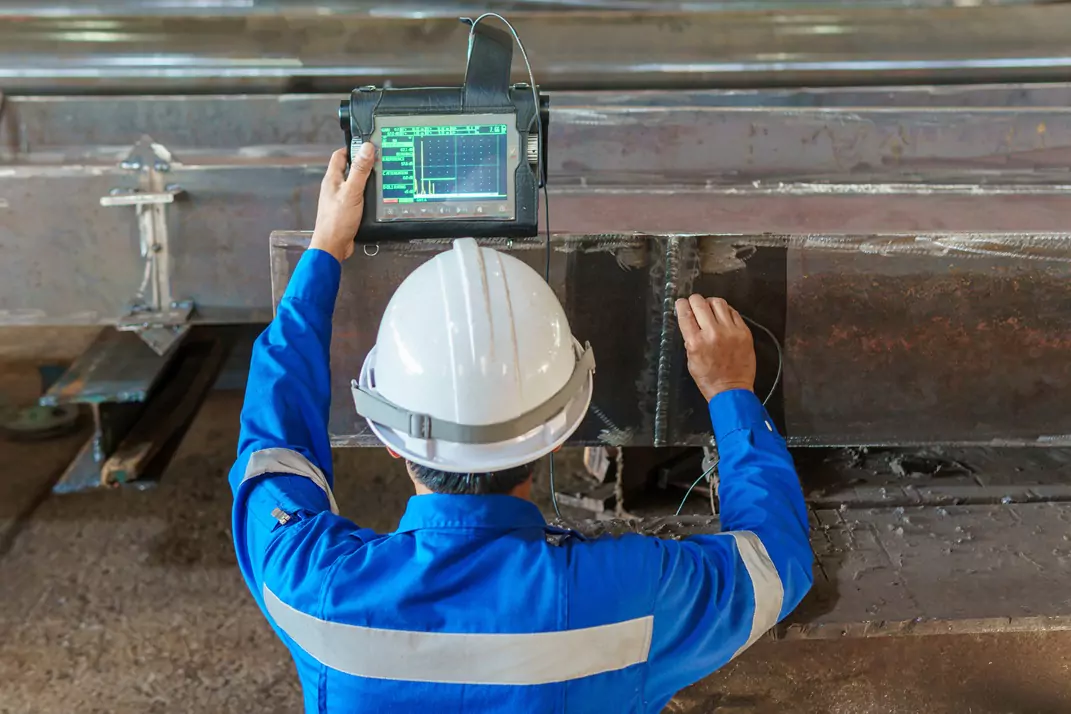
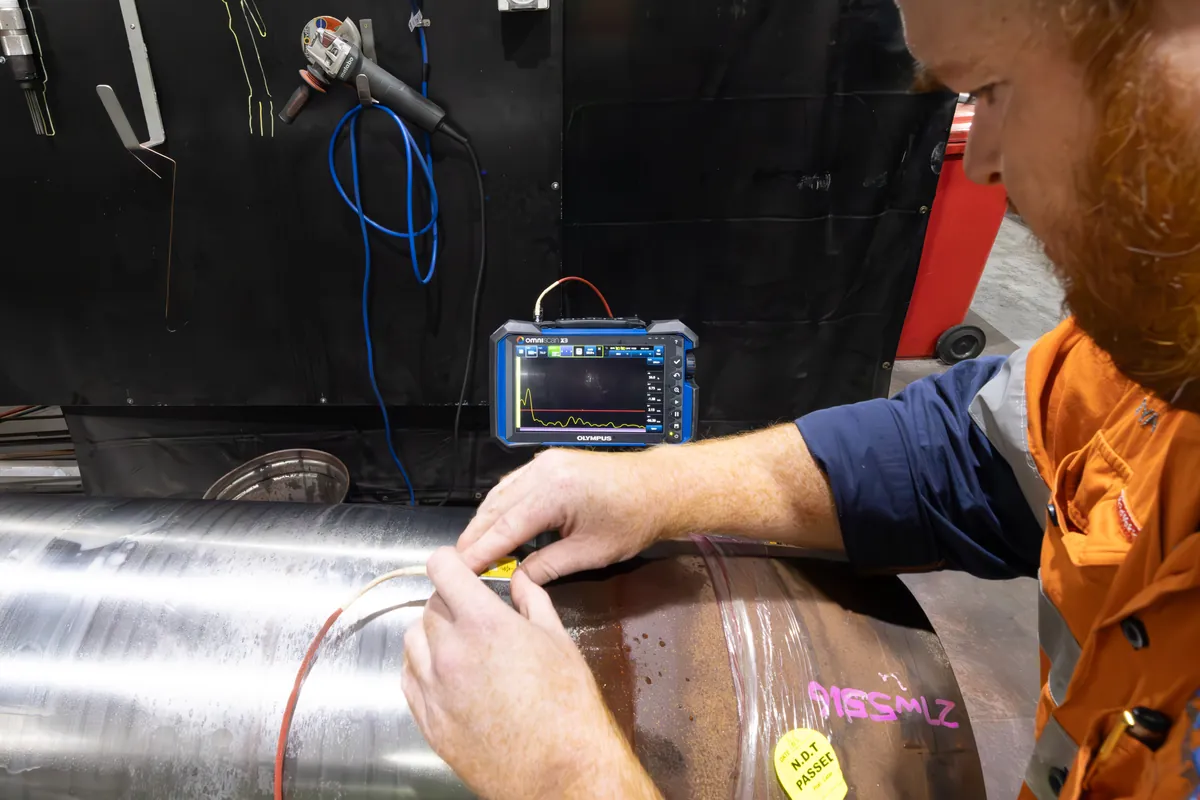
Ultrasonic testing is the usual volumetric method for structural steel, because it works on thick sections, only needs access from one side and avoids the radiation exclusion zones radiography needs. Phased array ultrasonic testing produces an image of the weld cross-section and a recorded scan, which helps on complex joints. See our article on phased array weld inspection.
Timing matters too. Some steels and thick sections can develop hydrogen cracking after welding has finished, so specifications often require a hold time before final NDT. Results are then assessed against the acceptance limits for the weld's category, so the inspector must know whether a weld is SP or GP before signing it off.
NDT should be carried out by technicians certified for the method, typically to ISO 9712. Where a test report is issued under NATA accreditation, it carries independent assurance that the testing body's methods and competence have been assessed.
What an AS/NZS 1554 Inspection Report Should Show
A weld inspection report you can rely on at handover, or years later during an audit, typically records:
- Identification: the drawing, member and weld numbers, so every result traces to a weld.
- Category and criteria: the weld category (SP or GP) and the acceptance standard applied.
- Method and technique: the NDT method, technique standard, equipment and calibration.
- Results: accept or reject for each weld, with the location, size and type of any recordable indication.
- Personnel: the technician's name and certification.
- Repairs: rejected welds tracked through repair and re-inspection, so none is left open.
For the qualification side of welding, start with destructive weld testing vs NDT. For welds on pressure equipment rather than structures, see how the pressure equipment standards fit together.
APEC Inspection is based in Newcastle and provides visual, magnetic particle, penetrant, ultrasonic and phased array ultrasonic testing of welds, along with independent verification of welding procedure and welder qualification tests. We are accredited by NATA to ISO/IEC 17025:2017, and our non-destructive testing is carried out by technicians certified to ISO 9712 through AINDT. If you have welds to inspect to AS/NZS 1554, request a quote and include the drawings, weld categories and the extent of NDT your specification calls for.