Testing Aging Pipelines with Smart NDT
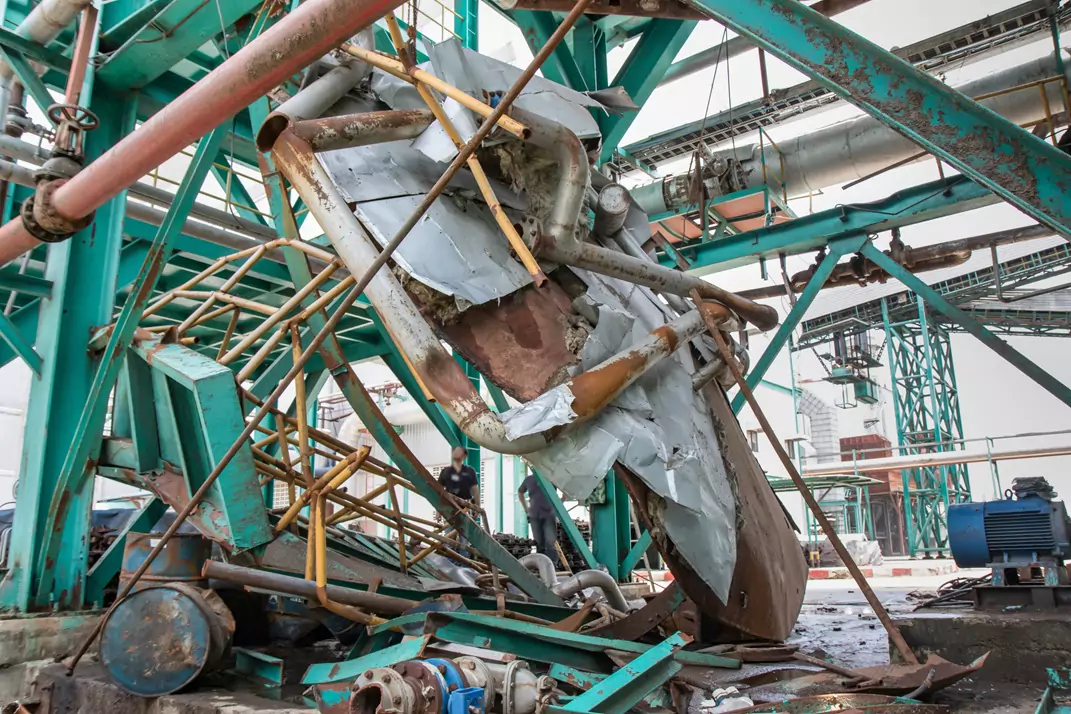
Old pipelines can hide big problems. Metal grows thin. Cracks spread. Coatings fail in soil and sea. Testing aging pipeline assets with smart non destructive testing, or NDT, keeps people safe. It also keeps product flowing and protects your licence to operate, a point echoed in industry discussions on the challenges posed by aging pipeline infrastructure.
In Australia, a significant number of gas and liquid pipelines are now operating well past the midpoint of their design life. Standards like AS 2885 take a structured, risk‑based approach, not guesswork. That means you must know real wall loss, real crack size, and real growth rates over time. Simple visual checks are no longer enough on their own. You need data you can stand behind in front of regulators, aligning with pipeline integrity assessment practices from leading experts.
That is where a focused NDT pipeline inspection program matters. It lets you see inside steel without cutting it. It helps set clear, defendable inspection intervals. It also feeds better plans for repair, coating work, and even replacement, supported by pipeline diagnostics best practices.
In this article, we look at three things. First, how NDT supports safe life on aging lines. Second, how risk based inspection turns raw readings into smart timing. Third, how to mix tools like smart pigs, guided wave, drones, and phased array for a full picture. By the end, you will know what to ask for and how to compare testing options, and where experienced NDT specialists can add value.
Why NDT Is Vital for Aging Pipeline Integrity
As Across Australia, advanced ultrasonic techniques and intelligent smart pig tools are now standard practice for oil and gas pipeline integrity management, reflecting how core non destructive testing methods and intelligent in-line inspection technologies underpin modern pipeline asset integrity programs research on intelligent advanced NDT technologies for pipeline asset integrity.
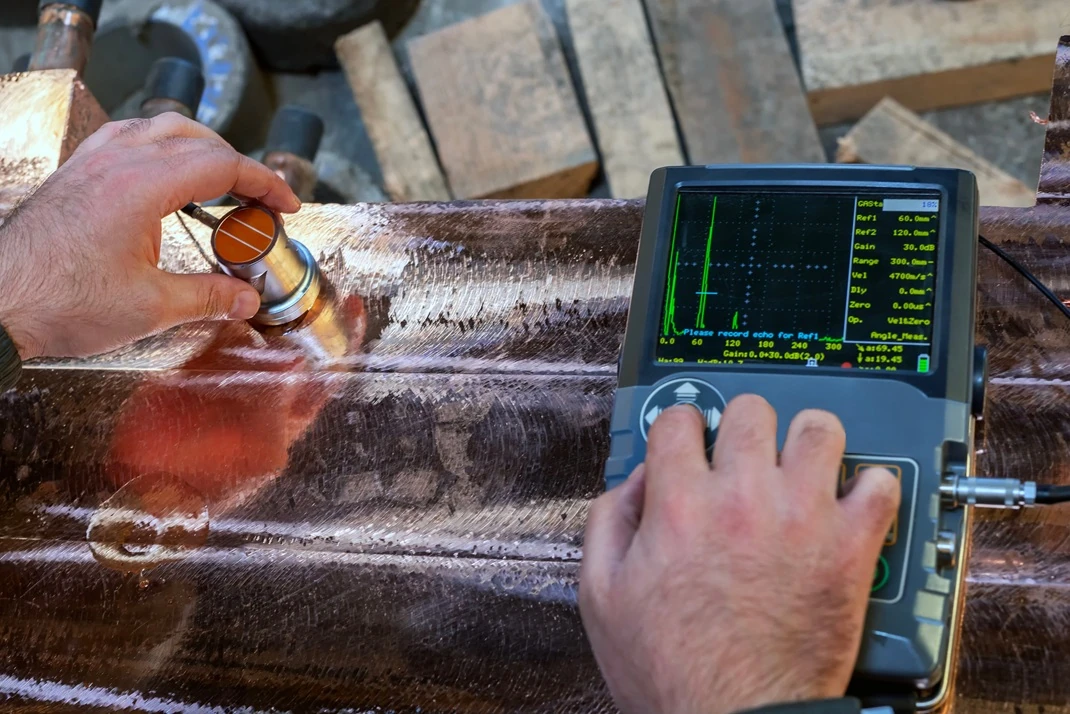
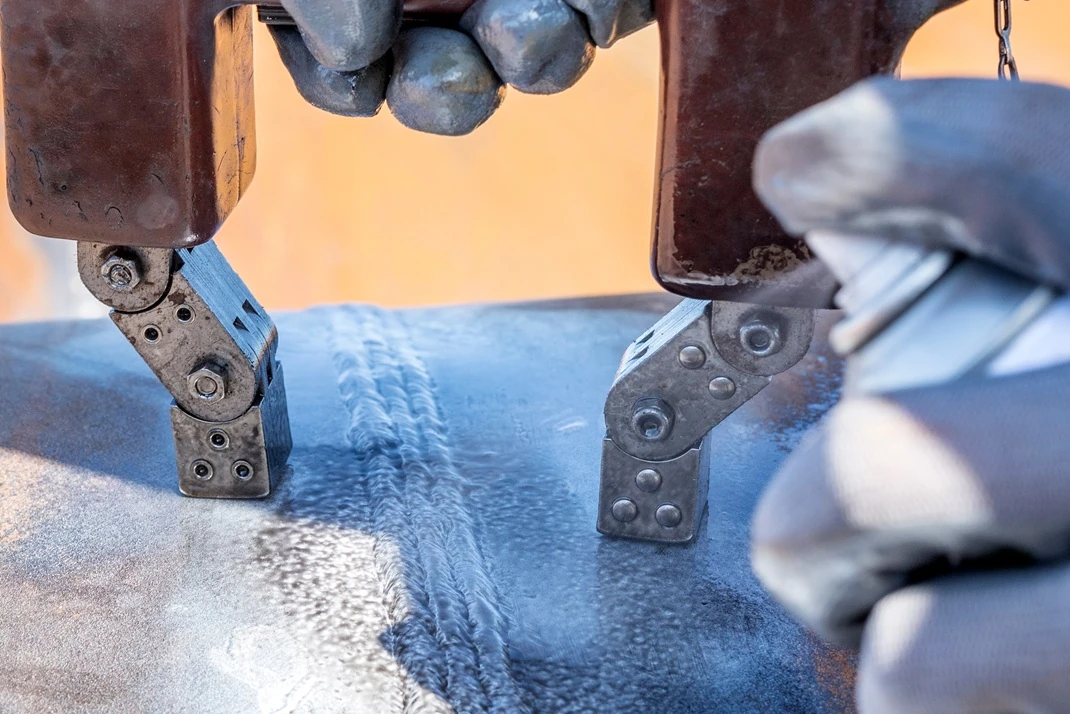
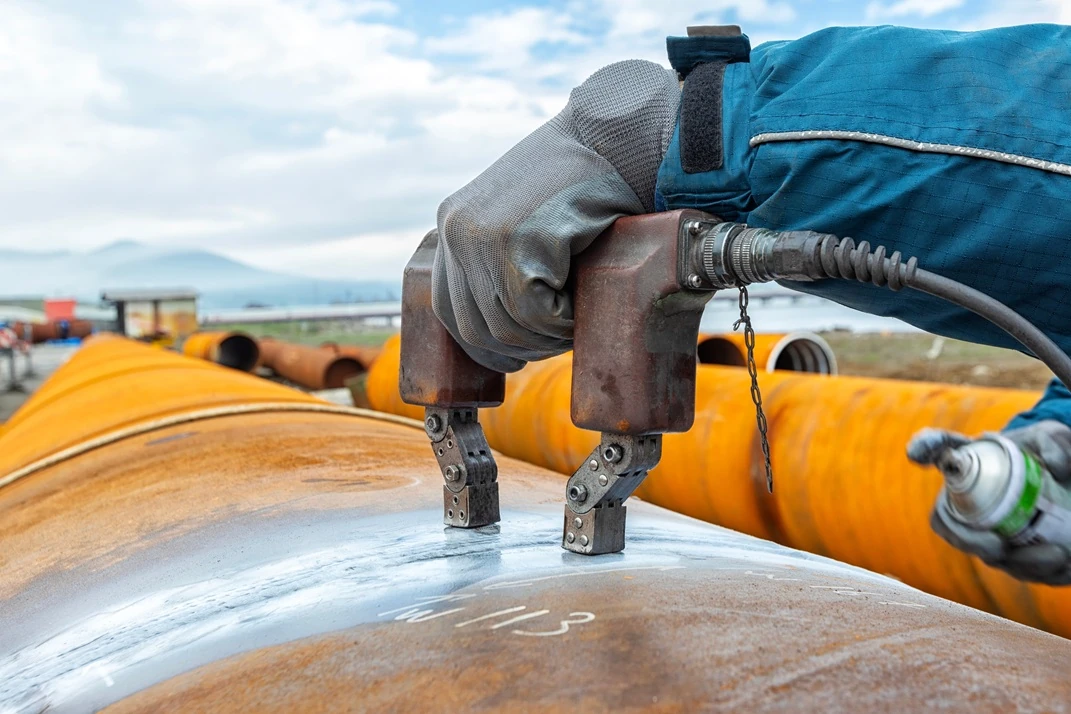
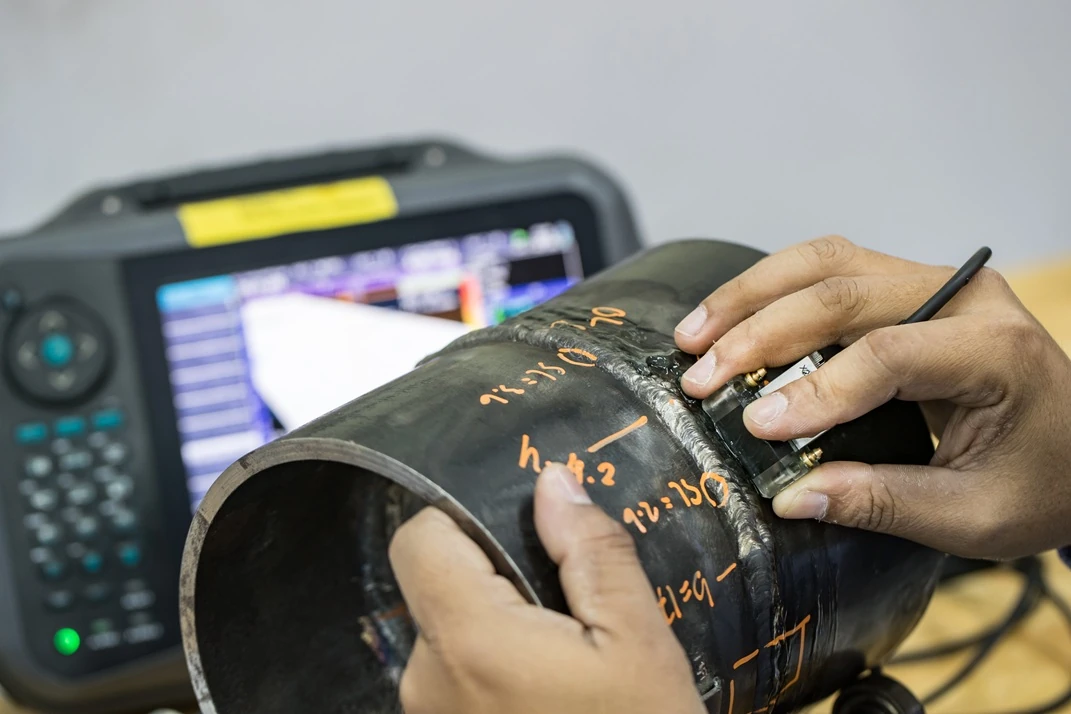
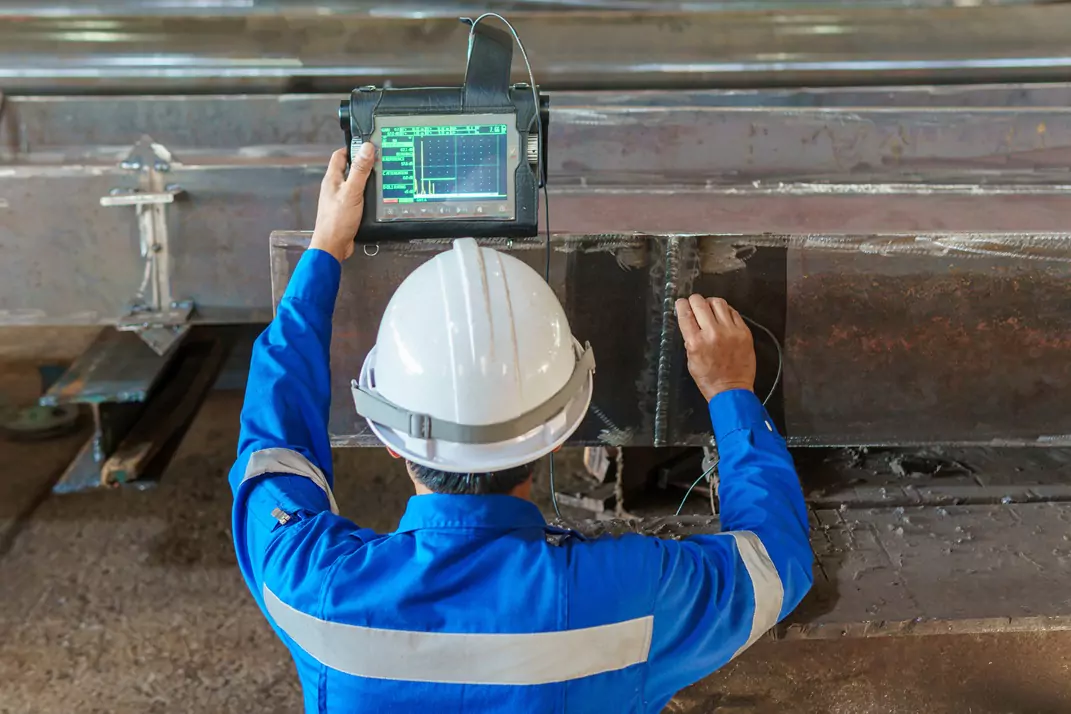
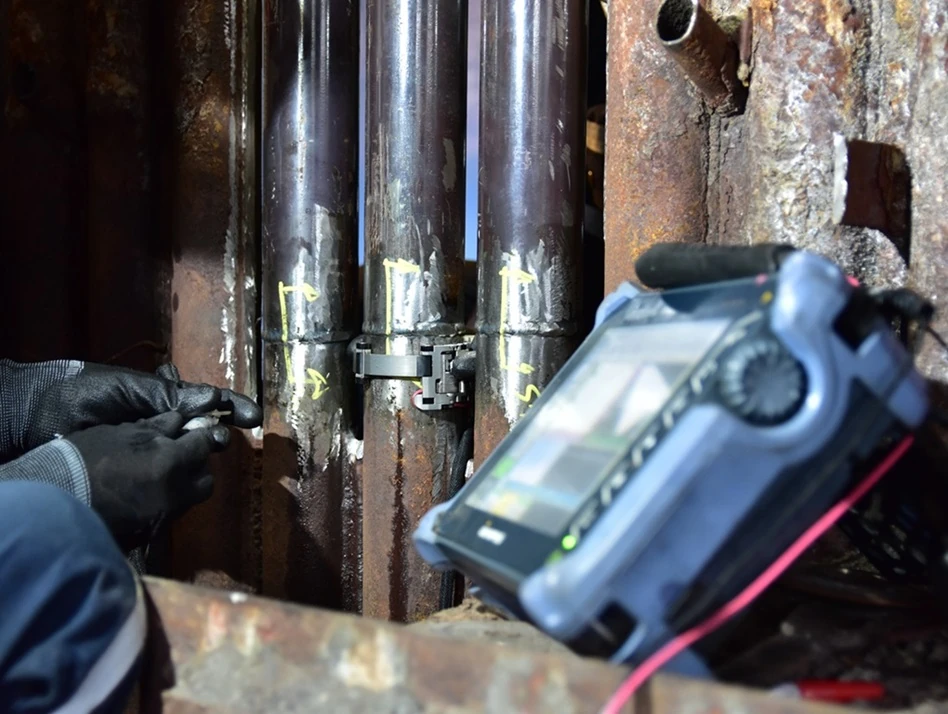
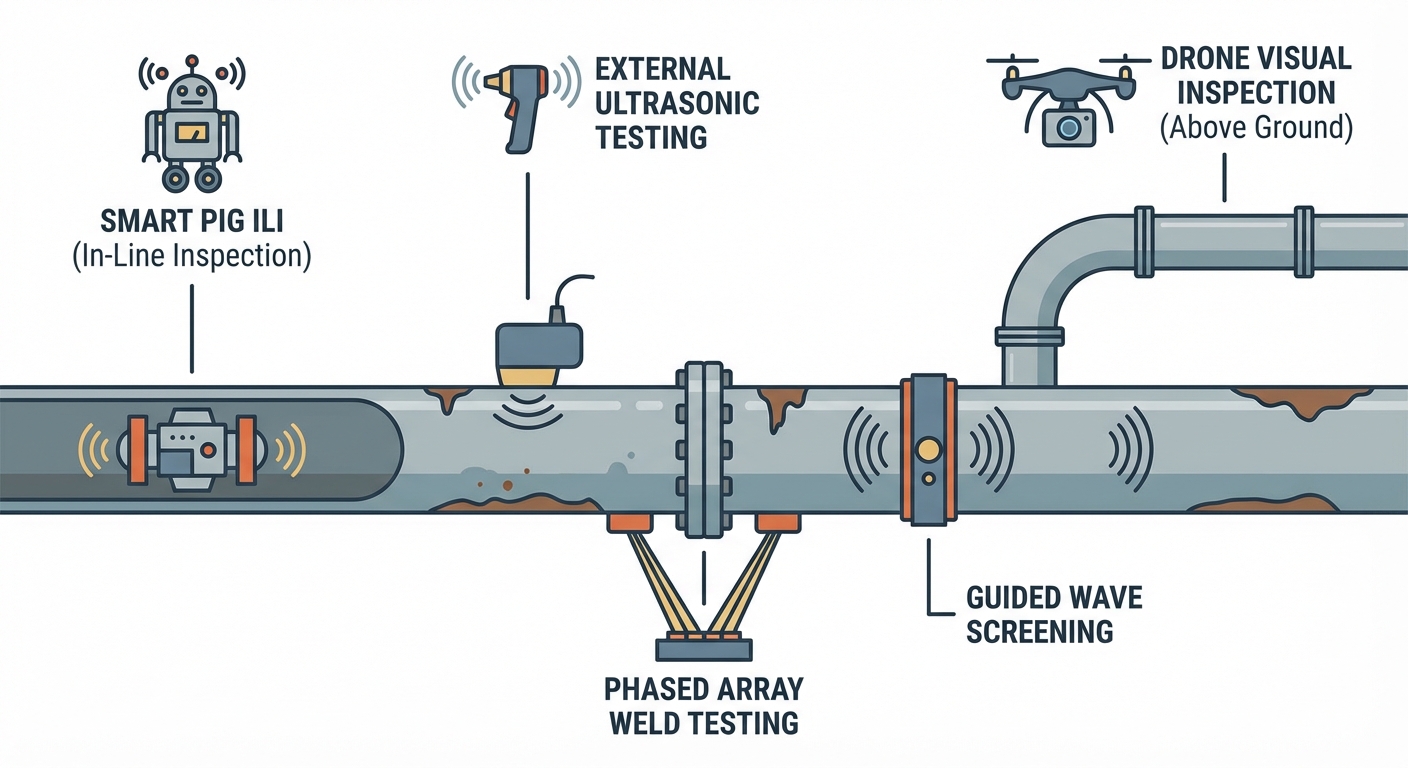
Different NDT methods see different flaws. In line inspection, or “smart pigging”, tracks wall loss, dents, and some forms of cracking over long runs. External ultrasonic testing checks local wall thickness with very high accuracy. Phased array ultrasonic testing scans complex welds and branch zones. Guided wave ultrasonic testing screens long spans from a single point, which works well at road crossings or pipe racks where access is poor, and complements the approach outlined in integrated nondestructive testing for aging infrastructure.
For above ground sections, we often add visual testing with drones. Aerial images show coating breaks, ground movement, and third party work. For buried lines that cannot take a pig, we look to direct assessment and long range ultrasonics. A robust testing plan rarely relies on one method only. Each tool fills a blind spot left by another.
The key with aging assets is simple. Do not wait for a leak to tell you there is metal loss. Use NDT to measure it, trend it, and prove it is still within safe limits. When you partner with a provider like our pipeline and storage tank inspection services, you also gain help interpreting complex data sets into plain language actions for the field team.
Risk Based Testing and Inspection Frequency
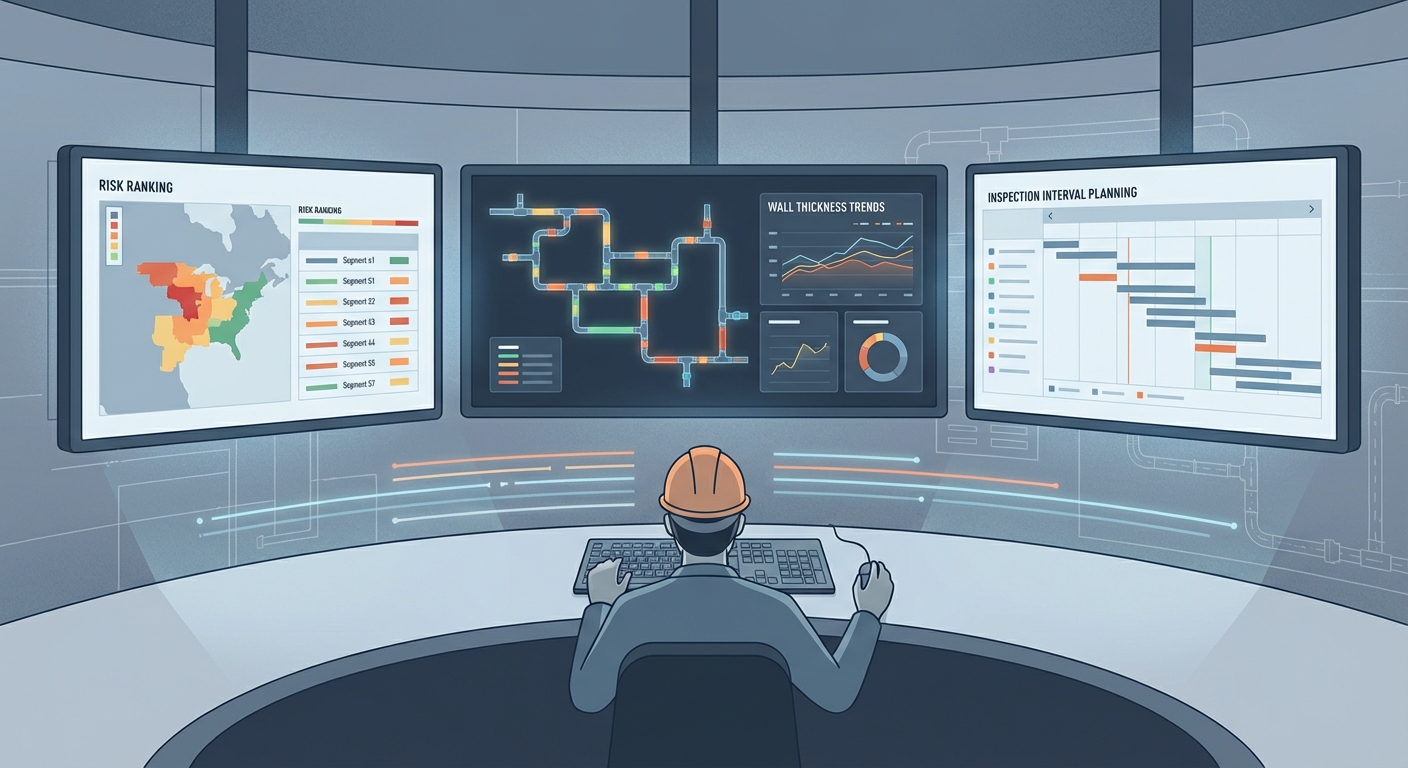
Many operators still think in fixed cycles. They book a big inspection every few years, just because that is how it was done. In Australia, many key regulators are increasingly adopting risk‑based inspection approaches instead. Under risk based inspection, or RBI, you focus more attention where failure would hurt most. You might keep a ten year interval on a low risk rural section. You might shorten it sharply near a school or river, in line with guidance such as the INGAA pipeline safety and integrity management framework.
Strong NDT data makes RBI possible. You start with your threats list. Things like internal corrosion, external corrosion, stress corrosion cracking, geohazards, and third party damage. Then you bring in real wall thickness, defect size, and defect growth rates from your last round of tests. Long range ultrasonic and smart pigs help show where corrosion clusters. High resolution ultrasonic confirms actual depth at hot spots, supporting the type of data-driven planning described in studies on optimizing inspection and maintenance of pipelines.
Australian documents on gas networks show how this works in practice. One pipeline operator plans in-line inspections at default intervals of up to ten years on some lines, based on risk-based integrity assessments that demonstrate low corrosion growth and stable conditions using strong data sets, with engineering reviews adjusting the timing where required. Higher risk segments move to shorter cycles or closer patrols. Risk is not a guess; it comes straight from your NDT reports and your consequence maps. See, for example, the Jemena integrity program overview, which explains how interval changes must link back to evidence from inspection history and defect assessments. https://www.aer.gov.au/system/files/2024-07/JGN%20-%20RIN%20-%204.3%20-%20Pipeline%20Integrity%20Program%20%20-%2020240628%20-%20Public.pdf
For you, this means one clear thing. Better testing can actually save money when used well. If NDT shows very low damage and slow growth, you may justify longer gaps in some areas. If it shows rapid thinning, you can direct budget to those spots and avoid broad, unfocused digs. Our asset integrity planning and coating inspection support ties field readings to simple, visual risk maps so your team can see this logic at a glance.
Choosing the Right Mix of NDT Methods
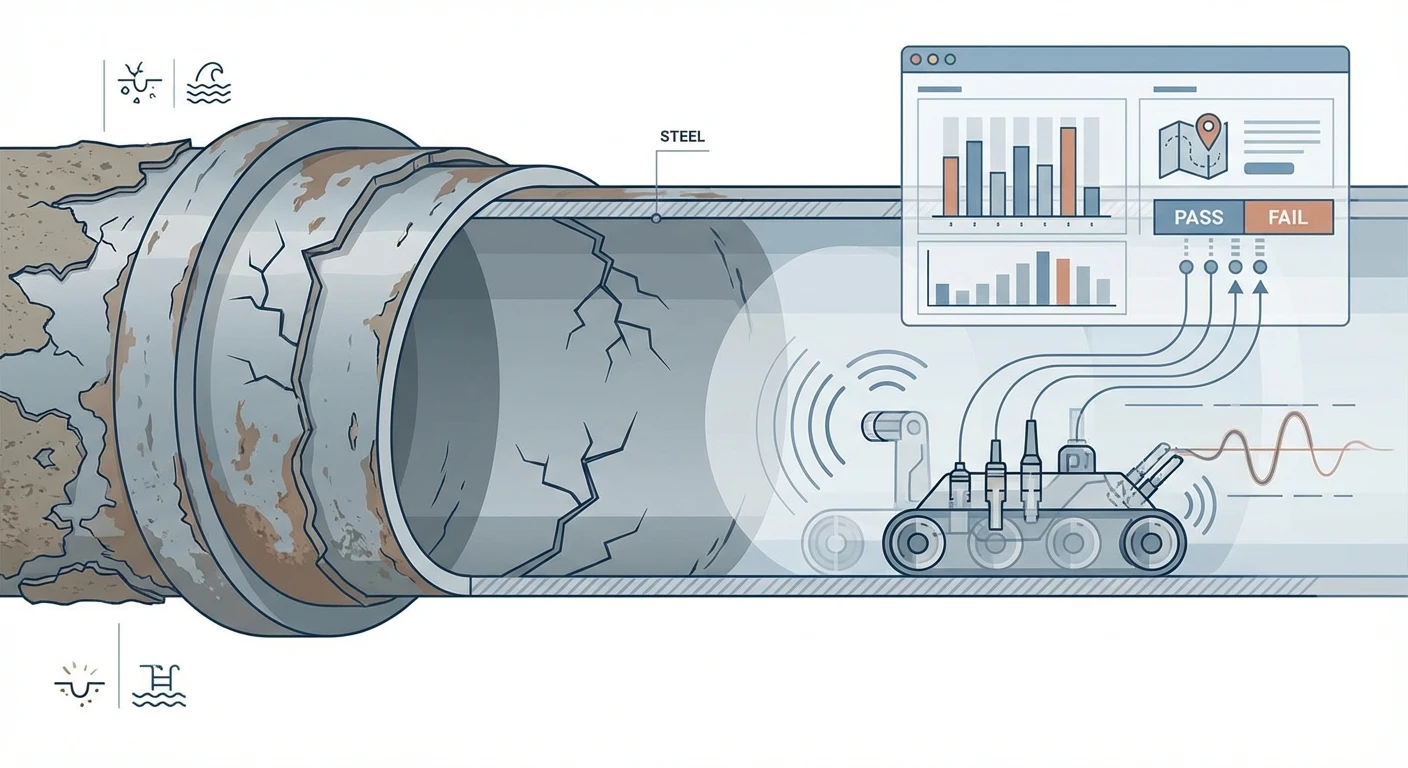
No single test will answer every question on an older pipeline. The art lies in picking a small set of tools that cover your key threats without blowing your budget. You start with a simple matrix. List your pipeline segments down one side. Add your main threats across the top: internal corrosion, external corrosion, cracking, movement, and third party damage. Then match each box to the most suitable NDT method, drawing on guidance from pipeline diagnostics best practices.
For long, piggable steel lines, a high quality smart pig run is often the backbone. It reveals general wall loss, pits, and dents over hundreds of kilometres. Around critical welds, we add phased array ultrasonic testing. For spans under roads or in racks, guided wave testing can screen for corrosion from a single ring location. Research and field experience with guided wave show it can screen on the order of tens of metres, and in favourable cases up to around a hundred metres in each direction from one spot, which is ideal where full access is hard or impossible. https://pmc.ncbi.nlm.nih.gov/articles/PMC6308566/
In remote areas, drone based visual surveys now play a growing role. Drones reach steep slopes and river crossings without putting people at risk. They spot vegetation changes, washouts, and exposed pipe. Those signs then trigger closer NDT checks on the ground. For non piggable lines, direct assessment paths and external ultrasonic checks, sometimes mixed with long range ultrasonics, still give solid confidence, especially when paired with aerial drone inspection services.
When you engage our NDT and inspection services, we walk through this selection with your engineers and operations staff. We also consider digital points like data storage, trending, and links into your maintenance system. The outcome is a lean, focused test plan. It does not chase every new gadget. It uses a few proven NDT tools in smart ways, tailored to your pipeline age, coating type, contents, and surroundings, an approach we often explore in our pressure vessel NDT insights.
Conclusion: Turn Aging Pipelines into Known Pipelines
Aging pipelines are not the real problem. Unknown condition is. With the right mix of non destructive testing and risk based planning, you can turn an old line into a well understood, well controlled asset. You cut leak risk, meet Australian standards, and often reduce wasted spend on blind digs, particularly when you work with regional NDT experts who understand local conditions.
If you are ready to strengthen your testing aging pipeline program, we can help. Reach out to APEC Inspection to discuss a targeted pipeline NDT plan for your network. We will keep the language simple, the data solid, and the focus on safe, steady flow for the long term.